Geography and Growth of the Southern Colonies: A Historical Overview
90 likes | 221 Views
Explore the geographical and social dynamics of the Southern Colonies, including the significant Mason-Dixon Line that symbolized the division between North and South. Discover how Virginia's population increased post-1650, leading to conflicts with Native Americans and Bacon's Rebellion. Understand the establishment of Maryland as a colony of religious toleration for Christians and the contrasting developments in the Carolinas and Georgia. Uncover the distinct lifestyles between the Tidewater region's plantations and the isolated backcountry farms.


Geography and Growth of the Southern Colonies: A Historical Overview
E N D
Presentation Transcript
The Southern Colonies Miss Bails
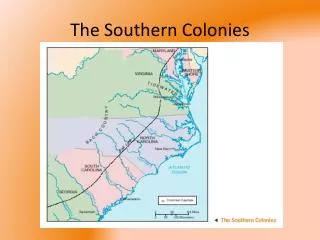
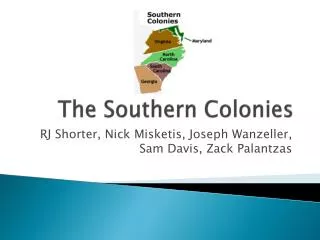
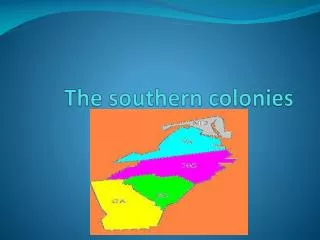
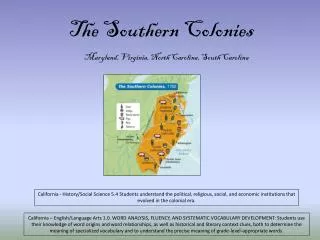
I. Geography of the Southern Colonies Mason-Dixon Line – line between Maryland/Pennsylvania; later line between the North and the South Maryland, Virginia, North Carolina, South Carolina, Georgia Warm/humid, long growing season (tobacco/rice) – spurs slavery
II. Virginia Grows 1650: death rate fell, population increased A. Conflicts with Native Americans 1. Disease/violence shrank Native Americans population 2. 1622/1644: violence; hundreds of colonists killed 3. 1644: Native Americans had to accept English rule
II. Virginia Grows B. Bacon’s Rebellion 1. 1660s: poor colonists no farmland (tobacco); forced to work for wealthy 2. Farmers move inland, fight Native Americans, governor avoids war because of fur trade 3. 1675: Nathaniel Bacon attacked Native Americans; governor declares them as rebels, Bacon burns down Jamestown 4. Could not stop settling of Native American land
III. Religious Toleration in Maryland 1632: Maryland new colony Catholics/Protestants both settled; leads to tension Lord Baltimore, 1649: Act of Toleration (Religious toleration – only for Christians)
IV. Colonies in the Carolinas and Georgia 1663: new charter for Carolina North grew slowly, small farms for tobacco South grew fast, sugar, rice – slavery
IV. Colonies in the Carolinas and Georgia A. Georgia 1. Created to keep Spain out 2. Created for debtors
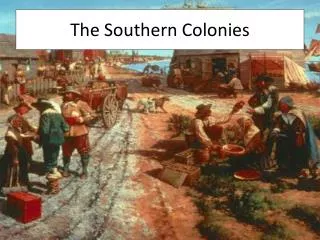
V. Change in the Southern Colonies Two distinct ways of life A. The Tidewater Region 1. Plantations: crops exported profitably to Europe 2. Divided whites/slaves; divided rich/poor
V. Change in the Southern Colonies B. The Backcountry 1. Cut off from society, isolated farms 2. Backcountry believed governments did not care about them