Comparative Analysis of Han China and Gupta India: Achievements in Governance and Culture
This overview explores the significant governmental and cultural advances of Han China (206 BCE – 220 CE) and the Gupta Empire (320 CE – 550 CE). Highlights include the civil service examinations in China that favored meritocracy, contrasted with India’s caste system. Technological developments like the Great Wall and the creation of paper in China are examined alongside India’s innovations, including the Mahabharata and advancements in medicine. Key figures such as Samudragupta and Chandragupta II exemplify the military and cultural zeniths of their respective eras.

Comparative Analysis of Han China and Gupta India: Achievements in Governance and Culture
E N D
Presentation Transcript
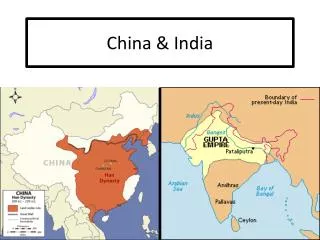
Central Government: Han China & Gupta India • Gupta Empire • (320 CE – 550 CE) • -- Arabic numerals • -- Vaccines • -- Stupas • Samudragupta = greatest military genius in Indian history; nearly conquered the entire Indian subcontinent • Chandragupta II = ruled during the height of India’s Golden Age • Han Dynasty (206 BCE – 220 CE) -- Paper -- Gunpowder -- Silk • Mandate of Heaven = the divine right to rule by Chinese Emperors • Civil service examinations = Officials gained position by merit rather than family connections
Cities:Pataliputra & Chang’an • Pataliputra= capital of the Gupta Empire • Chang’an = capital of the Han Dynasty
Technology:The Great Wall of China • Great Wall of China = a system of walls built and rebuilt since 221 BCE that stretches about 4,500 miles across China’s northern border
Social Classes:Caste System of India • Brahmins = priests • Kshatriyas= warriors • Vaisyas= landowners and merchants • Sudras= peasants and servants • Untouchables = sanitation workers and latrine cleaners Brahmins Kshatriyas Vaisyas Sudras Untouchables
Writing:Calligraphy • Calligraphy = fine handwriting made by Chinese scholars with brush and ink
Organized Religion:Mahabharata • Mahabharata= the greatest Indian epic of 100,000 verses that mixes history, mythology, and religion
Job Specialization:Silk Makers • Silk making = the process of making silk thread from the cocoons of silkworms by the Chinese around 1000 BCE; silk fabric became China’s most valuable export