Understanding Motivation: Intrinsic vs. Extrinsic and the Role of Hunger in Behavior
This document delves into the intricacies of motivation, exploring intrinsic versus extrinsic types, exemplified by figures like Shania and Ronaldo. It provides a critique segment for group assessment on member contributions. The text also offers insights into motivational videos, highlighting the significance of positive aspects in such content. Additionally, it examines the biological and psychosocial factors surrounding hunger, obesity trends, and the impact of cultural and technological changes. Ultimately, it encourages reflective thinking on these vital topics.

Understanding Motivation: Intrinsic vs. Extrinsic and the Role of Hunger in Behavior
E N D
Presentation Transcript
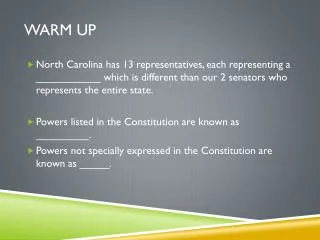
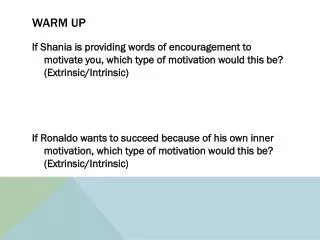
Warm UP • If Shania is providing words of encouragement to motivate you, which type of motivation would this be? (Extrinsic/Intrinsic) • If Ronaldo wants to succeed because of his own inner motivation, which type of motivation would this be? (Extrinsic/Intrinsic)
GROUP CRITIQUE • HONESTLY rate your group members scale 1-5 • 1 being : Ehhhhhh.. Not great at all. • 5 being : My dream group member • Include yourself
VIEIWING PARTY! • We are going to view our wonderful motivational videos! • While watching…. • Assign each video a number (first video watched = #1, second video watched = #2, you can figure out the rest….) • Write down 1 POSITIVE thing about their video and what aspect of the video made you feel most MOTIVATED.
HUNGER • We need food to GROW, REPAIR, STORE • Homeostatic drive (return to normal state)
Lateral Hypothalamus • When stimulated -> begin eating; even if full • If LH was removed -> animal would die of starvation • Signals when to eat • More active in cold temperatures
Ventromedial hypothalamus • If stimulated -> stop eating • IF VMH is removed -> eat everything in sight (obesity) • Signals to STOP eating • More active in warm temperatures
Other factors to hunger • Glucostatic theory- hypothalamus monitors energy in blood, drops LH signals to eat • Insulin converts calories to energy (Pancreas) • Stored energy to useful energy by glucagon (Pancreas) • Set-point: weight which your body fluctuates daily
PSYCHOSOCIAL HUNGER FACTORS • External cues • What causes you to eat, even if you aren’t hungry? • Boredom • Smell • Appearance • Others eating • Stress • Time
OBESITY • Why has obesity risen? • Read the provided article with your partner. While you read you are pulling out key details to answer the prompted question. Include all changes in culture, technology, and biological factors. • Respond to the last line of the article, how do you feel about this value?