Exploring Mitosis: The Key to Cell Division
Discover the intricate process of cell division through mitosis, where complex organisms originate from a single fertilized egg. Learn how cells specialize and evolve, contributing to growth and regeneration. Explore the stages of mitosis and the replication of chromosomes. Understand how genetic information is passed on and how cells differentiate into various types to serve distinct roles within the body. Access free resources on mitosis at www.worldofteaching.com for comprehensive insights.

Exploring Mitosis: The Key to Cell Division
E N D
Presentation Transcript
Mitosis Cell division Visit www.worldofteaching.com For 100’s of free powerpoints
Cell division All complex organisms originated from a single fertilised egg. Every cell in your body started here, through cell division the numbers are increased Cell then specialise and change into their various roles
Mitosis • Mitosis is the process by which new body cell are produced for: • Growth • Replacing damaged or old cells. This is a complex process requiring different stages
Parent cell Chromosomes are copied and double in number Chromosomes now split 2 daughter cells identical to original
Mitosis • All daughter cells contain the same genetic information from the original parent cell from which it was copied. • Every different type cell in your body contains the same genes, but only some act to make the cells specialise – e.g. into nerve or muscle tissue.
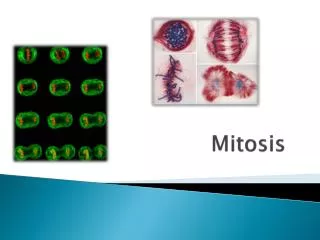
Mitosis – bone cell slides 2 1 Cells split Chromosomes copied Parent cell 3 4 5 2 daughter cells Copies separating