Download
1 / 9
90 likes | 204 Views
This overview explores the fundamental functions of the U.S. Judicial Branch, headed by the Supreme Court, which serves as the final authority on legal disputes and the constitutionality of laws. It examines the concept of jurisdiction, the appointment process for Supreme Court justices, and the interplay of checks and balances among branches of government. With original jurisdiction over certain cases and the power to conduct judicial reviews, the Supreme Court plays a crucial role in interpreting the Constitution and shaping American law.

E N D
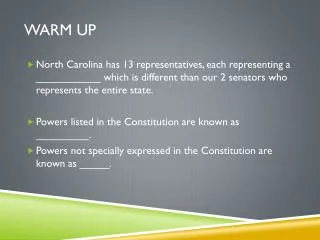
The head of the Judicial Branch is,___________ • Define jurisdiction: Warm Up
Decides if laws are allowable under the U.S. Constitution • Power is limited Supreme Court
Diplomats from foreign countries • Disputes between states Original Jurisdiction
Appealed from lower district courts Other cases
Supreme Court chooses the cases it hears • Final authority; Constitution, Congress, Treaties • Refusal- lower court decision stands Picky, picky!!!
8 associate justices and a chief justice- total of 9! • President appoints Supreme Court justices, with the approval of the Senate The make-up of Supreme Court
Judicial Review- constitutional or not? POWER TO THE COURT
Checks and Balances • Executive branch to enforce it’s laws • Congress can pass a new law or change a law ruled unconstitutional Limitations
We will QUIETLY, be going to the MAC Lab If we are not quiet, we will turn around and come back to the room like a 2nd grade class. You are going to be researching the current justices of the Supreme Court. Let’s look over the hand out! Research Time!