Foreign Policy
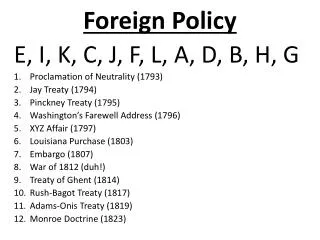
Foreign Policy. E, I, K, C, J, F, L, A, D, B, H, G Proclamation of Neutrality (1793) Jay Treaty (1794) Pinckney Treaty (1795) Washington’s Farewell Address (1796) XYZ Affair (1797) Louisiana Purchase (1803) Embargo (1807) War of 1812 (duh!) Treaty of Ghent (1814)

Foreign Policy
E N D
Presentation Transcript
Foreign Policy E, I, K, C, J, F, L, A, D, B, H, G • Proclamation of Neutrality (1793) • Jay Treaty (1794) • Pinckney Treaty (1795) • Washington’s Farewell Address (1796) • XYZ Affair (1797) • Louisiana Purchase (1803) • Embargo (1807) • War of 1812 (duh!) • Treaty of Ghent (1814) • Rush-Bagot Treaty (1817) • Adams-Onis Treaty (1819) • Monroe Doctrine (1823)
#2 TrendsGo from neutrality & isolation to engagementMilitary weakness (perceived & real) to respectReacting to world events to asserting our demands of the world (Louisiana Purchase, Embargo?, War of 1812, Adams-Onis, Monroe Doctrine) #1) Pluses • Proclamation of Neutrality • Washington’s Farewell • Pinckney Treaty • War of 1812? • Rush-Bagot Treaty • Adams-OnisTreaty • Monroe Doctrine #1) Minuses • Jay Treaty? • XYZ Affair • Embargo • War of 1812? • Treaty of Ghent?
Foreign Policy National Interests Principles (+) help use our power to create more countries favorable to our position (+) give our people a sense of purpose (+) encourages us to do better on fulfilling our principles here at home (-) get us into conflicts unnecessarily (-) require possibly unpopular sacrifces (+) strengthens our position & power (+) expand territory, trade & wealth (+) may mean less military action (-) may have fewer allies (-) may wait too long to act & let problems get bigger (-) might involve more reactive than proactive action