13 Colonies
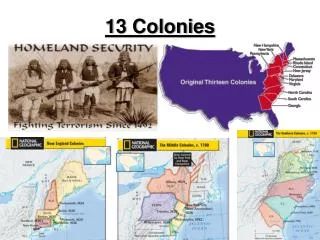
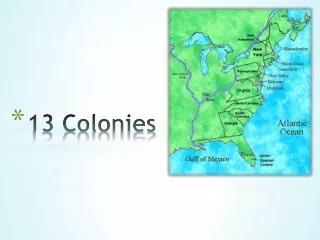
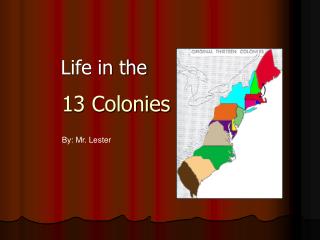
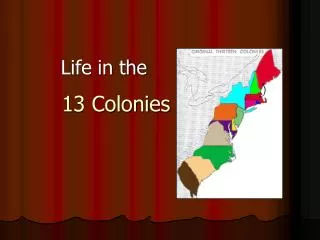
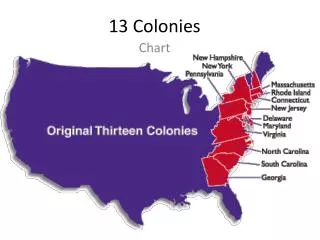
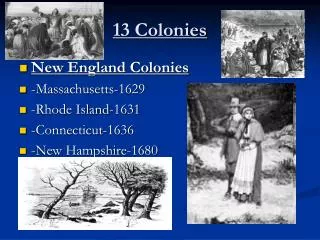
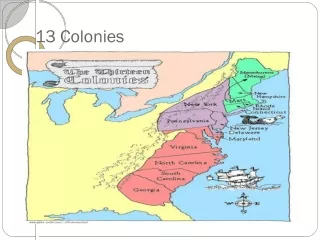
13 Colonies. Forming of America. 13 Colonies . New England Massachusetts (includes present day Maine) Rhode Island Connecticut New Hampshire Middle Colonies New York New Jersey Pennsylvania Delaware. Southern Colonies Maryland Virginia North Carolina South Carolina Georgia.


13 Colonies
E N D
Presentation Transcript
13 Colonies Forming of America
13 Colonies • New England • Massachusetts (includes present day Maine) • Rhode Island • Connecticut • New Hampshire • Middle Colonies • New York • New Jersey • Pennsylvania • Delaware • Southern Colonies • Maryland • Virginia • North Carolina • South Carolina • Georgia
Why did they come? • Religious Freedom. • Some sold everything. • Some had enough and some. • Some were kidnapped. • Some became servants for the chance. • Promise of cheap land. • Greater Opportunity to earn a living. • Immigrants wrote home to their families about America. • Encouraged everyone to come over.
Servants and Slaves • Indentured Servants • Price of their voyage was paid off through working in America. • Once they paid their debt they became free. • 4 out of 5 in Virginia and Maryland • Slaves • Plantations • Need a lot of work • Slave Trade • Business of buying or selling people. • Slaves were bought by wealthy plantation owners to work on the plantations.
Slave Trade • 1 out of 7 (1/7) died during the voyage. • Packed very tight in a ships • To increase profit.
Colonial Economy Who doesn’t love money?
13 Colony Economy Overview • England tried to take control with laws. • Exports can only be shipped to England • Goods leaving a country • Imported • Cloth • Metal tools • Glass • Machines • Although England tried to control the Colonies they found a way to rebel.
Southern Colonies • Great for Growing Crops • Climate • Hot and Humid • Good Soil • Cash Crops(their exports to England) • Tobacco • Rice • Indigo • Blue Dye • Jobs • Plantation Owners • Overseer • In charge of the slaves • Slaves • Shopkeepers
Middle Colonies • Breadbasket of the Colonies • Farmed • Corn • Wheat • Sold Surplus to England and West Indies • West Indies • Original location where Columbus landed • Needed to import for the slaves • Used all available land to grow Sugar Cane • Jobs: • Farmers • Fishermen • Shop keepers
New England • Rocky Soil • Barely able to grow food for themselves. • Used forests and Sea • Jobs: • Ship builders • Fishermen • Shipbuilding • England’s ships were too expensive. • Needed boats to fish. • Used forests for their trees. • Great craftsmen's ship England began buying their ships.
New England Colonies • Fishing Industry • Fish • Whales • Exported their fish to • Spain • Portugal • West Indies • Fishing and Ship building created other industries: • Rope Makers • Sail Makers • And others that had skills to make other materials and equipment • Boston became a large trading City and Port.
Triangular Trade Route • 1st leg • Boston or New York • Sailed to Europe • Cotton, Sugar, Coffee, Tobacco, Iron Goods, rum, guns. • 2nd leg • Europe to Africa • Posts, pans, horses, rum, guns.
Triangular Trade Route • 3rd Leg *Middle Passage* • Africa to West Indies and the 13 Colonies. • African slaves. • Lasted 6 to 8 weeks. • Traded for Molasses to help make rum. • All Port cities made a lot of money from the Triangular Trade.
Why does it matter? • Jobs for the 13 • Farming • Fishing • Trading • In the cities there were: • Blacksmiths • Carpenters • As the colonies grew…. • Depended less on imports from Europe. • 1700’s there was a free enterprise economy. • People can start any business they want • Colonists begin to get uneasy with Europe.