Understanding Platelets: Functions, Disorders, and Clinical Implications
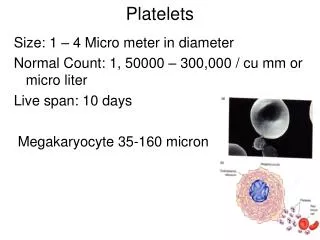
Platelets are small, colorless, anucleate bodies in mammalian blood vital for clotting. Produced by megakaryocytes in the bone marrow, each can yield 5,000 to 10,000 platelets, which survive approximately 10 days before being destroyed in the spleen. Normal platelet counts range from 150,000 to 300,000 per microliter. Disorders include thrombocytopenia (low count with risks like easy bruising and bleeding) and thrombocytosis (high count, potentially leading to clots). Effective diagnosis and management are essential, especially for patients on anticoagulant therapy.

Understanding Platelets: Functions, Disorders, and Clinical Implications
E N D
Presentation Transcript
Platelets Matea Mrčelić, 2nd year University of Zagreb, School of Medicine2013/2014 Mentor: A. Žmegač Horvat
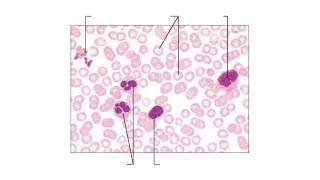
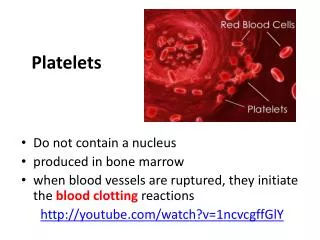
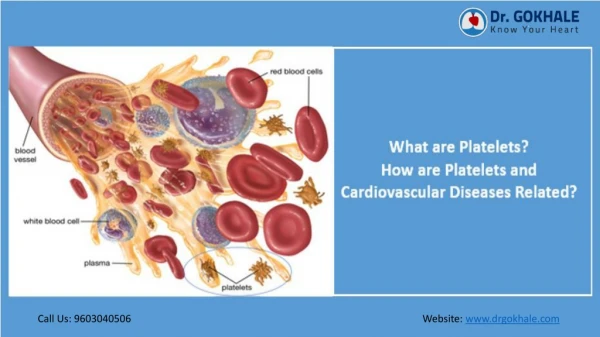
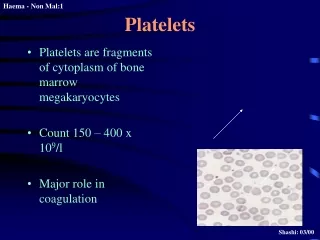
Definition Small colorless anucleate disk-like body of mammalian blood that assists in blood clotting
Process of differentiation helped and accelerated by thrombopoietin Each megakaryocyte produces 5,000 – 10,000 platelets Last step of thrombopoiesis - in bone marrow or in circulation Lifespan: 10 days, old platelets destroyed in spleen
Platelet count • Included in complete blood count • Normal range: 150,000 – 300,000 per microliter • Can be combined with platelet function test • Useful test for patients receiving anticoagulant therapy
Thrombocytopenia • Decrease of plateletcount - below 50,000 per microliter • Symptoms: easy bruising, frequent bleeding from the gums, nose, or GI tract, thrombocytopenic purpura • Cause: inherited, medications, chemotherapy, alcoholism • Treatment: splenectomy or blood transfusion
Easy bruising Thrombocytopenic purpura
Thrombocytosis • Having more than 450,000 platelets • Primary and secondary – difference in causes • Symptoms: spontaneous blood clots in the arms and legs, which if untreated can lead to heart attack and stroke • Treatment for primary thrombocytosis: plateletpheresis
References • Guyton and Hall Textbook of Medical Physiology, 11th Edition • http://www.platelet-research.org/1/function_hemo.htm# • http://www.hopkinsmedicine.org/heart_vascular_institute/clinical_services/centers_excellence/womens_cardiovascular_health_center/patient_information/health_topics/platelets.html