Digestive System Review
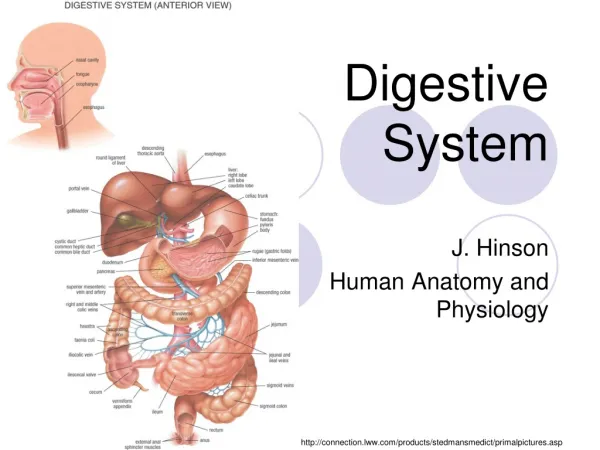
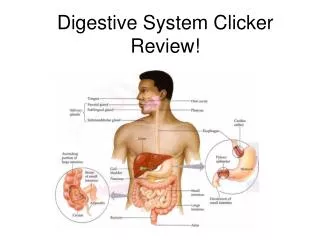
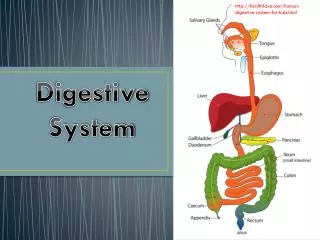
This guide provides an in-depth review of the human digestive system, detailing each structure labeled in the diagram, including the oral cavity, stomach, gall bladder, pancreas, large intestine, small intestine, and rectum. Key topics include the initiation of protein digestion, the roles of various organs like the liver and pancreas, nutrient absorption locations, and the processes of mechanical and chemical digestion. Special attention is given to the small intestine's function and its unique structures that facilitate nutrient absorption through villi.

Digestive System Review
E N D
Presentation Transcript
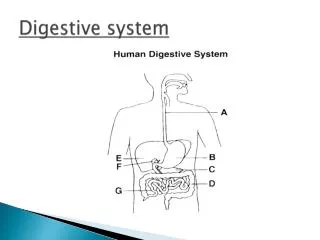
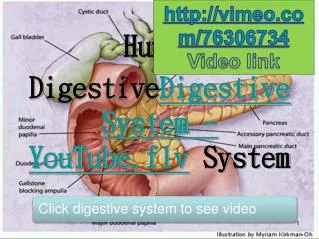
Identify each structure labeled in the diagram. oral cavity stomach gall bladder pancreas large intestine small intestine rectum
Where does protein digestion begin? What is the function of F? 3. Where are nutrients absorbed into the blood? In the stomach Absorb water In the small intestine
4. What does C produce? Where does it go? 5. What is the function of G? 6. Chemical digestion is completed in this structure. 7. What type of digestion occurs in A? Pancreatic juice Goes to the small intestine store bile small intestine mechanical and chemical
What is the name of this process? What is its function? • Where in the digestive tract does this occur? • peristalsis • To push food through the digestive tract esophagus, stomach, small intestine, large intestine
What is structure F? What is the function of this substance? • 2. What occurs in structure B? • 3. What is the function of structure A? • liver • to produce bile chemical digestion of proteins The esophagus pushes food down into the stomach using peristalsis.
Through which of these structures does food pass? • Which organs are not part of the gastrovascular tract? How do they aid in digestion? Esophagus (A) Small intestine (D) Stomach (B) • Liver (F) – produces bile that goes to the SI • Gall bladder (E) – stores bile • Pancreas (C) – releases pancreatic juice into SI
Carbohydrates Proteins Vitamins Identify the nutrient being described: • Main source of energy • Used for growth and repair of body cells • Maintain normal functioning of the body • Type of fat that is liquid at room temperature • Makes up a large percentage of cytoplasm and blood • Carbohydrate that cannot be digested • Help prevent disease • type of fat that contributes to cholesterol • Small carbohydrates • Made up of many amino acids • Maintains bonesand teeth. Make up your rbc’s • Source of stored energy Unsaturated Water Fiber Vitamins Saturated Simple carbohydrates Proteins Minerals Lipids
Describe the role of the small intestine in digestion. • Where most chemical digestion occurs • Where chemical digestion is completed • Lined with VILLI which absorb nutrients into the blood