Download
1 / 19
190 likes | 302 Views
This lecture explores the remarkable potential of stem cells and nuclear transplantation in correcting gene defects. It details the derivation and differentiation of embryonic stem (ES) cells from blastocysts, emphasizing their totipotency. The process includes creating ES cells via nuclear transplantation of Rag2-/- mouse nuclei, repairing defective genes, and assessing hematopoietic stem cells in Rag2-/- mice. The results indicate significant challenges in reconstituting immune systems, highlighting the need for improved Hematopoietic Stem Cell (HSC) generation strategies.

E N D
Lecture 12. Stem Cells, Nuclear Transplantation, and Combined Cell & Gene Therapy Strategies
Gene Defects Can be Corrected By Homologous Recombination
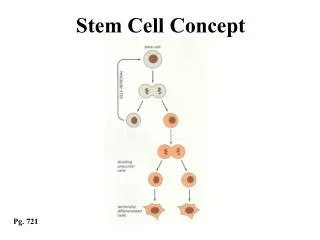
Embryonic Stem (ES) Cells are Derived from the Inner Cell Mass of the Blastocyst ES cells are Totipotent in vivo Totipotent=can become ALL Cell Types (Including Germ Cells)
Adult Stem Cells can be Derived from Most Tissues: These Cells are Pluripotent Pluripotent=Can reconstitute some, but not all, cell types
ES Cells can be Induced to Differentiate into Pluripotent Stem Cells in vitro, given appropriate genetic or hormonal stimuli
Step 3B: Differentiate ES cells to HSC in vitro And Place these cells in Rag2-/- Mice Step 1: Create ES cells by Transplanting the Nucleus of a Rag2 -/- mouse Step 2: Repair the Rag2 gene in the ES Cells Strategy for Today’s Paper: Step 3A: Test for Rescue Using Mice Created from the ES Cells
Step 1C: Let Embryo with Nuclear Transplant Develop To the Blastocyst Stage and Create ntES cell lines
Southern Blotshowing the Repair Step 2: Strategy for Repairing the Mutant Rag2 Allele after Nuclear Transplantation
T-cell Receptor Chains are Rearranged in the Rag R/- Mice Step 3A: Mice Are Made From Repaired ntES Cells
Step 3A: Mice Are Made From Repaired ntES Cells Complete Immune System is Reconstituted in these Mice
Step 3A: Mice Are Made From Repaired ntES Cells Complete Immune System is Reconstituted when Bone Marrow from these Mice is Transferred into Rag2 -/- Mice
Step 3B: Reconstitute Mice with Pluripotent Stem Cells Derived from the Repaired ntES cells Infect with HoxB4 Retrovirus Vector
Step 3B: First Attempts Were Unsuccessful: No Rescue of Immune System Observed • Hypothesis: The ntES Derived-Stem Cells Do Not Express • Correct Levels of Histocompatibility Type I Antigens • and are Eliminated by Natural Killer (NK) cells. • Use anti-NK antibody to remove NK cells in Rag-/- Mice • Use double KO mice: Rag2 -/- and • IL-2 Common Cytokine Receptor g Chain (gC) -/- • As Recipients
Results: Complete Rescue Of Myeloid Lineages, but only low level rescue of B-cellsandT-Cells Modest rescue of B-cells but not of T-cells The Repaired Allele Is present in the Mice
Rearranged T-cell receptors are detected by PCR Analysis of the ntES Engrafted Mice (~20% of WT)
Conclusion: Need to be able to make better Hematopoietic Stem Cells from the ntES cells Simply overexpressing Hox4B with the Retrovirus Vector Favors Myeloid vs. Lymphoid Differentiation Retrovirus Gene Transfer is ineffective for Gene Therapy.