Overcoming Barriers to Zero Carbon Construction: Technology, Performance, and Design Innovations
This comprehensive overview explores the barriers to entry in achieving zero carbon construction, focusing on technology, training, and material performance. Key areas include the importance of thermal performance, insulation materials, and the challenges of achieving airtight construction. We examine the roles of renewable energy sources like wind turbines and solar performance while highlighting the necessity of plant and equipment advancements. The report addresses the need for skilled labor in modern methods of construction (MMC), strategies for improved building quality, and innovative solutions such as rainwater harvesting and micro-energy generation.

Overcoming Barriers to Zero Carbon Construction: Technology, Performance, and Design Innovations
E N D
Presentation Transcript
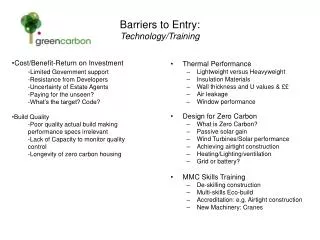
Barriers to Entry:Technology/Training • Thermal Performance • Lightweight versus Heavyweight • Insulation Materials • Wall thickness and U values & ££ • Air leakage • Window performance • Design for Zero Carbon • What is Zero Carbon? • Passive solar gain • Wind Turbines/Solar performance • Achieving airtight construction • Heating/Lighting/ventilation • Grid or battery? • MMC Skills Training • De-skilling construction • Multi-skills Eco-build • Accreditation: e.g. Airtight construction • New Machinery: Cranes • Cost/Benefit-Return on Investment • -Limited Government support • -Resistance from Developers • -Uncertainty of Estate Agents • -Paying for the unseen? • -What’s the target? Code? • Build Quality • -Poor quality actual build making • performance specs irrelevant • -Lack of Capacity to monitor quality • control • -Longevity of zero carbon housing
Lightweight Construction • Towards Passivhaus Standards • Improved Insulation/ Thermal performance • Led lighting • Improved Window performance • Wood pellet Boilers • Solar Thermal • Rainwater Harvesting • Low energy MHRV • Micro-energy generation • Timber Frame-open web joists • Airtight Construction • MHRV • Minimal cold bridging • 20-35kWhr/m2/yr heat requirement • 1 air change per hour @ 50 pa • UK Design
RuralZed Thermal Mass MMC • Glulam Frame • Concrete Thermal Mass • Rapid MMC • 5kWhr/m2/yr • Micro-energy generation • Led lighting • Wood pellet Boiler • 125yrs minimum life span