Islam
100 likes | 220 Views
Muhammad, born in 570 AD in Mecca, is the Prophet of Islam whose revelations from Archangel Gabriel began in 610 AD. His teachings, captured in the Quran, emphasized a return to the worship of Allah and introduced the Five Pillars of Islam. After facing persecution, he migrated to Medina, leading to community growth and conflict with Mecca. By 632 AD, his death marked the rapid expansion of Islam, which became the world's second-largest religion with over 1.3 billion followers today. Explore Muhammad's transformative life and the enduring impact of his teachings.


Islam
E N D
Presentation Transcript
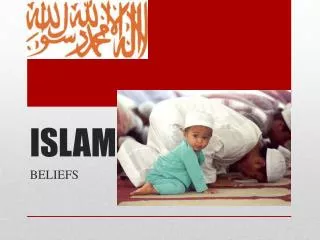
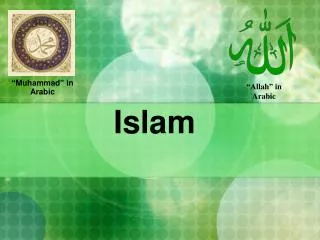
“Allah” in Arabic Islam “Muhammad” in Arabic
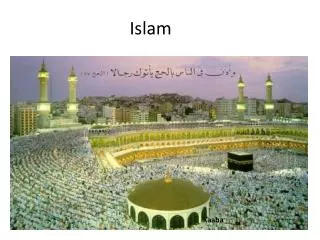
Muhammad, the Prophet • 570 AD - born in Arab peninsula • Family of merchants from Mecca (town) • Religious practice was all over the place (pagan, christian, etc) • Ka’aba– formerly dedicated by Abraham to Yahweh; temple later served pagan gods • Place of annual pilgrimage, for Arabs
Muhammad, the Prophet • Muhammad was a reflective man, would spend time alone in Cave Hira • 610 AD – Muhammad received revelation from Archangel Gabriel • Ramadan • Revelation of Qu’ran to Muhammad • Message: people had lost true way to worship God (Allah); revelations were the way he wanted to be worshipped Cave Hira – location of revelations
Muhammad, the Prophet • Revelations occurred for 6 months • Family, followers adopted new ways • Muhammad spent next ten years teaching new ideas • 620 AD – M. ejected from Mecca; went to Medina & spent next 8 years in war vs. Mecca • 632 AD – died, ascended to Heaven Coverage of Islam, 632 AD
Spread of Islam, 632-750 AD • By 642, Muslim Arabs had conquered from Egypt to Persia • By 656, from Tripoli to Pakistan • In 661, 4th Caliph, Ali, died – split in Sunni, Shia • By 711, Arabs invaded Spain, India • In 732, defeat of Arabs at Tours
Beliefs: Five Pillars of Islam • Shahada • Declaration of Faith • “There is no God but Allah & Muhammad is his Prophet” • Salat • Mandatory prayer 5 times a day, towards Mecca (connect to God) • Zakat • 2.5% tithe to charity • Sawm • Fasting during Ramadan (purify) • Hajj • Once in life = pilgrimage to Mecca Muslims performing the Salat The hajj
Inherent Appeal of Islam • Simplicity of belief: follow 5 pillars = salvation • Equality for believers • All promised salvation • All equal, whether earliest member or latest conquest • High moral teachings • Strict moral code; very little gray • Respect for “People of the Book” • Christians, Jews not forced to convert • BUT special tax on Christians & Jews who didn’t convert (dhimmi); wear special clothing, acknowledge Muslim superiority, severe legal restrictions (2nd class citizens) • Forced conversion of pagans (non Abrahamic people) – convert or die
Sources of Islamic Teaching • Qu’ran(revelations of God made to Muhammad) • Taught by oral repetition • Learn in Arabic (truest translation of revelations) • “Perfection” of monotheistic teachings about God • Hadith (traditions relating to life, deeds of Muhammad) • Important tools for determining how Muslims should live (WWMD?) • First written down in 7th C. • Sharia (Islamic law) • Regulations of public, private life • Traditional way of living
Islam Today • Second largest religion in the world • 1.3 billion Muslims (20% world’s population) • Fastest growing religion in the world • 43 countries with Muslim majority populations (SE Asia; S. Asia; Middle East; N. Africa; Eastern Europe)