Understanding World War I: Causes, Warfare, and the Treaty of Versailles
In this lesson on World War I, students will learn key concepts such as the Central Powers, Allies, and trench warfare. The assassination of Archduke Ferdinand in 1914 triggered a chain reaction, leading to widespread conflict across Europe. The lesson covers the harsh conditions of trench warfare, the introduction of new weapons, and the U.S. entry into the war. Students will also explore the Treaty of Versailles, its implications for Germany, and how it set the stage for future conflicts. Questions for reflection will encourage critical thinking.

Understanding World War I: Causes, Warfare, and the Treaty of Versailles
E N D
Presentation Transcript
World War I In this lesson, students will be able to define the following terms: Central Powers Allies Trench Warfare The Treaty of Versailles Reparations E. Napp
In 1914, the Archduke of Austria was assassinated. Austrians believed that Serb officials had helped the assassins. Austrians decided to invade Serbia. E. Napp
Austria’s decision to invade Serbia set off a chain reaction that soon involved all of Europe’s major powers. E. Napp
During the war, Germany, Austria-Hungary, and Turkey became known as the Central powers. Britain, France, and Russia were known as the Allies. E. Napp
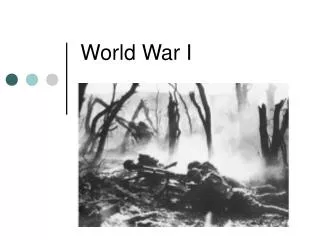
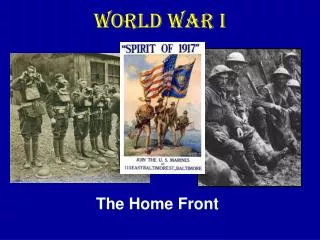
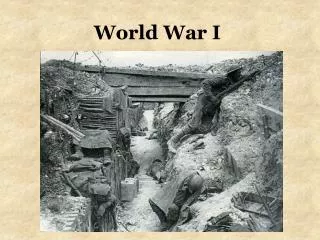
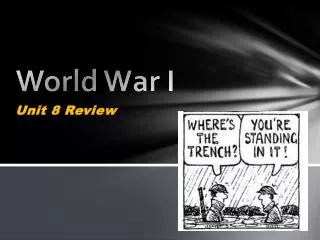
During the first World War, soldiers dug themselves into trenches, protected by barbed wire and machine guns. E. Napp
Trenches extended hundreds of miles. Many soldiers died due to the harsh conditions in the trenches. E. Napp
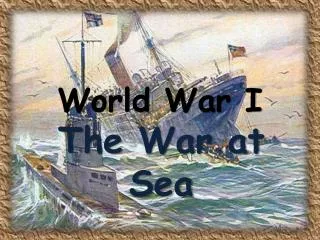
New weapons were used during World War I. These weapons included the machine gun, poison gas, submarines, and airplanes. E. Napp
Initially, the United States was neutral. However, Americans were sympathetic to the British and French. When American ships were attacked by Germany in 1917, the United States entered the war while Russia dropped out of the war. E. Napp
The Russians had experienced a revolution and were promised “Peace, Land, and Bread.” When the Russians dropped out, the arrival of new American troops still favored the Allies. E. Napp
President Wilson announced Fourteen Points that he felt should be the basis of the coming peace. He planned to give each nationality its own government and end secret diplomacy. E. Napp
The Germans agreed to end the war and overthrew the Kaiser in 1918. However, the final peace terms turned out to be quite different from the Fourteen Points. E. Napp
The Treaty of Versailles (1919) concluded the peace with Germany. Germany lost territory to France and Poland, as well as all of its overseas colonies. The Austria-Hungary empire was divided into several smaller states. E. Napp
Germany lost its navy while its army was reduced to a small police force. Germany was forced to accept blame for starting the war and was forced to pay huge reparations (payment for damages) to the Allies. E. Napp
The League of Nations or an organization of nations was created to prevent future national aggression. However, the United States and Russia failed to join it thus weakening its power. The road to the Second World War was being paved. E. Napp
Questions for Reflection: • What event triggered the First World War? • List the nations of the Central Powers and the Allies. • What was trench warfare and why do you think it was particularly devastating? • What were the terms of the Treaty of Versailles? • Why did the Treaty of Versailles pave the way to future conflict in Europe? E. Napp