The Cold War: From Yalta to the Fall of the Berlin Wall
Explore the pivotal moments and decisions of the Cold War, starting with the Yalta Conference in February 1945 where the Big Three leaders divided post-war Europe and Germany into four zones of occupation. Witness the rise of the Iron Curtain as Eastern Europe fell under communist control. Discover the significance of the Truman Doctrine and Marshall Plan in containing communism, monumental events like the Berlin Blockade and Airlift, and the establishment of NATO and the Warsaw Pact. Finally, see the impact of the Berlin Wall's construction and its eventual fall in 1989 on global geopolitics.

The Cold War: From Yalta to the Fall of the Berlin Wall
E N D
Presentation Transcript
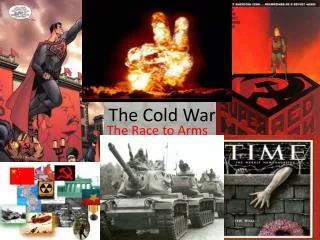
The Cold War The Race to Arms
The Yalta Conference (Feb 1945) • What would be done with post war Europe? • The Big Three decide to split Germany into 4 sections.
The Iron Curtain • From Stettin in the Balkans, to Trieste in the Adriatic, an iron curtain has descended across the Continent. Behind that line lies the ancient capitals of Central and Eastern Europe.-- Sir Winston Churchill, 1946
Communist domination and oppression • This set the tone for the cold war • Utilized for resources and political goals • Pits West vs East Germany • The people under Soviet rule had no rights • By 1948, every Eastern European country was under communist control
The Truman Doctrine (1947) • Strategy of containment against the soviet union and the spread of communism. Funds were allocated to fight the spread of communism. • In 1947, the U.S. gave $400 million to Greece and Turkey in order to help them put down communist revolts.
Marshal Plan (1948) • American program to aid Europe and help rebuild it after the end of World War II in order to prevent the spread of Soviet Communism.
* The U.S. gave over $12 billion in aid to European countries between 1948 and 1952, helping to improve their economies and lessen the chance of communist revolutions.
Soviet blockade: East Berlin West Berlin East Germany West Germany · In June of 1948, the French, British and American zones were joined into the nation of West Germany after the Soviets refused to end their occupation of Germany.
Berlin Air Lift: · President Truman decided to avoid the blockade by flying in food and other supplies to the needy people of East Berlin. · At times, over 5,000 tons of supplies arrived daily. http://www.youtube.com/watch?v=jqHqsYiUEwY&feature=related
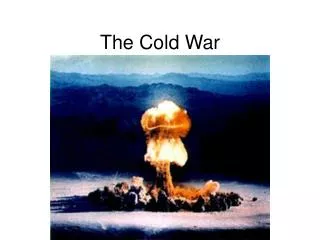
The Arms Race:A “Missile Gap?” • The Soviet Union exploded its first A-bomb in 1949. • Now there were two nuclear superpowers!
North Atlantic Treaty Organization (1949) • Luxemburg • Netherlands • Norway • Portugal • 1952: Greece & Turkey • 1955: West Germany • 1983: Spain • United States • Belgium • Britain • Canada • Denmark • France • Iceland • Italy
Warsaw Pact (1955) • East Germany • Hungary • Poland • Rumania • U. S. S. R. • Albania • Bulgaria • Czechoslovakia
· In response, the Soviets cut off West Berlin from the rest of the world with a blockade. Eventual site of the Berlin Wall
The Berlin Wall (1961) • Separated East Berlin from West Berlin. • The Eastern Bloc claimed that the wall was erected to protect its population from fascist elements conspiring to prevent the "will of the people" in building a socialist state in East Germany.
United Nations Goals • April 1945 50 delegates meet to adopt a charter. • To settle differences peacefully • International peacekeeping organization
The Security Council has 15 members-- five permanent members and 10 elected by the General Assembly for two-year terms. The permanent members are: Great Britain China Russia France United States U.N. - Live Webcast