Download

1 / 16
160 likes | 271 Views
Initially neutral, the U.S. became a crucial supplier for the Allies by 1917, following a series of submarine crises that heightened tensions with Germany. Notable incidents included the sinking of the Lusitania and the Sussex Pledge, which demanded the cessation of U-boat attacks on unarmed ships. Germany's resumption of unrestricted submarine warfare and the provocative Zimmerman Telegram compelled the U.S. to sever diplomatic ties and enter the conflict. President Wilson's Fourteen Points aimed to create lasting peace and the League of Nations, though domestic opposition led to the U.S. not ratifying the Treaty of Versailles.

E N D
I. Initial Neutrality • American Neutrality • Wilson issues neutrality proclamation on August 4, 1914. • By 1917, U.S. became a major supplier of Allied munitions, food, and raw materials.
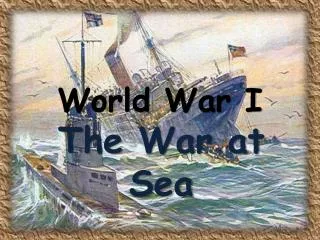
II. Submarine Crisis: Road to War in Europe • 1915, Germans began use of U-Boats submarines • Began to attack unarmed British passenger ships. • Lusitania-British liner sunk of the coast of Ireland on May 7, 1915. • Arabic is sunk • “Arabic Pledge”—Germans will not attack unarmed passenger vessels.
Submarine Crisis: Road to War in Europe (cont’d) 6. The Sussex Pledge (Ultimatum) • March 24, 1916—unarmed French steamer torpedoed but not sunk • 7 American injured. • The pledge was: If ALL U-boat attacks on ALL ships did not stop, Wilson would sever all German relations.
Submarine Crisis: Road to War in Europe (cont’d) 7. Jan. 31, 1917-Germany would sink all ships, belligerent or neutral • Germany could win if they cut off the flow of supplies to the Allies. • Feb.3, 1917—U.S. ends diplomatic relations with Germany • U.S. merchant ships were sunk.
Submarine Crisis: Road to War in Europe (cont’d) 11. Zimmerman Telegram 12. From German foreign secretary, Arthur Zimmerman • U.S. receives it Feb. 24, 1917 • Mexico should attack the U.S. • The “lost territories” of TX, NM, and AZ would then be returned to Mex. • March 1, 1917-Released to the American public; war with Germany was necessary.
III. Impact of the War at Home • Wilson :”War to end all Wars” • Jan. 1918—Wilson announces his Fourteen Points. • Wilson wants “peace without victory”---the victors would not be vindictive toward the losers. • Abolishing secret treaties, • Freedom of the seas, • Free trade, • Arms reduction, • end of colonization
Impact of the War at Home (cont’d) • 14th Point—Wilson considered the most important • Called of a “general association of nations” to preserve the peace (League of Nations) • The U.S. many opposed it.
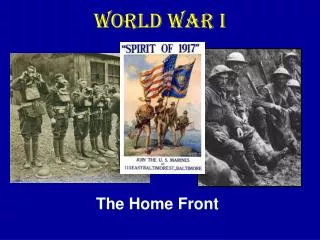
Impact of the War at Home (cont’d) • Committee of Public Information—by George Creel • Propaganda • Food Administration—Herbert Hoover • Reduce consumption • “Meatless Mondays” • “Victory Gardens”
War Industries Board • Production, wages, and prices of manufactured goods • Raising the Army? • Selective Service Act, 1917 • Conscription of males into military
Impact of the War at Home (cont’d) • Civil Liberties? • Germans; Anti-war protestors • Espionage & Sedition Acts • Schenck v. U.S. • Congress could limit free speech in wartimes
IV. Negotiating Peace • European powers wanted revenge! • League of Nations • Article X • Henry Cabot Lodge • Reservationists • Irreconcilables • U.S. never ratifies T.O.V • U.S. does not join League
The “Big Four” • Wilson George Wilson Clemenceau Orlando George