Download
1 / 24
240 likes | 351 Views
This chapter explores the complex reasons behind the outbreak of World War I, including nationalism, imperialism, and militarism. It delves into the assassination of Archduke Franz Ferdinand, the plunge into trench warfare, and the involvement of key nations like the Allies and Central Powers. The impact of war on society, including the draft and economic changes, is highlighted. Additionally, it discusses the aftermath, including Wilson’s 14 points and the Treaty of Versailles, which reshaped Europe and laid the groundwork for future conflicts.

E N D
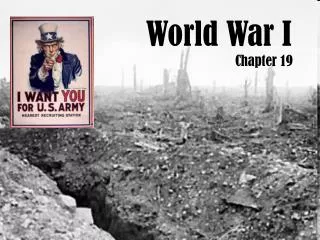
World War I Chapter 19
Activity: War • For what reasons do countries go to war? • In your opinion, are there any good reasons to go to war? Explain.
Causes • Nationalism – devotion to ones own country • Imperialism – countries extending their land and building empires • Militarism – building up armed forces • Naval arms race
2 Sides • Allies – France, Britain and Russia • Central Powers (Triple Alliance) – Germany, Austria-Hungary, Italy • Ottoman Empire also a big player
Assassination Leads to War • Archduke Franz Ferdinand is shot by Gavrilo Princip in Sarajevo. • June 1914 • Ferdinand was the heir to the Austrian Throne • Princip a Serbian nationalist • People thought it would be a short war between Austria-Hungary and Serbia • Many nations brought into conflict
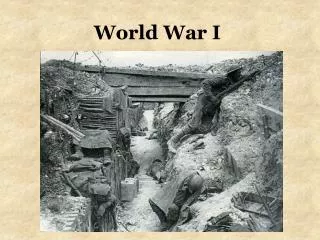
Fighting Begins • August 3, 1914 – Germany invades Belgium • Schlieffen Plan – defeat France first then Russia • Trench Warfare • “No Mans Land”
A letter home… • Imagine that you are fighting in WWI, in the trenches. Write a letter to a loved one (Mom, Dad, sibling, spouse, best friend) that detail what a soldier must have been thinking in the trenches. • Fears, experiences, sights, sounds, smells • Must be at least ½ a page no more than 1 page.
What about the US? • The question of neutrality • Do we stay out and profit by selling goods? • Do we stop the “Bully of Europe”
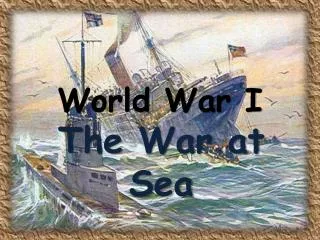
War Hits Home • British blockade of Germany • US ships can’t deliver goods • Sinking of the Lusitania by German U-boat • Americans on board • Other ships attacked, Americans killed • Woodrow Wilson elected president in 1916 • America declares war • Zimmerman note – Germany tries to lure Mexico away from US
War in America • Selective Service Act – Draft • 3 million drafted • Mass production of War Goods • Convoy System – protect ships
New Inventions • Machine Gun – 600 rounds per minute
New Inventions • Airplanes with guns
New Inventions • Anti-Aircraft Guns
New Inventions • Poison Gas and Gas masks
New Inventions • Tanks
War at Home • Income Tax • Anti-Immigration Scare • American’s fearful of an attack from within • Espionage and Sedition Acts • Don’t say bad stuff about the gov’t • Food Conservation • “One day meatless, another sweetless, two days wheatless and two more porkless
Everyone Helping • The “Great Migration” • African Americans flocking to the north to gain factory jobs • Women also taking jobs that were once seen as strictly for men
War Comes to a Close • Nov. 1918 – Both Germany and Austria Hungary surrender • Armistice – Truce • At 11:11 on 11-11-1918 • 22 million dead, 20 million wounded • World’s deadliest war, so far
After the War • Wilson’s 14 points – plan for world peace • League of Nations – countries and settle disagreements • Treaty of Versailles • Germany is responsible for war • Must pay reparations – war damages • Germany losses territory (Poland) • Breaks the German economy