Download
1 / 30
300 likes | 387 Views
This training aims to familiarize staff with HIV/AIDS concepts to engage in meaningful discussions, design programs for PLWHAs, and promote health benefits of improved water, sanitation, and hygiene. Learn about HIV virus transmission, diagnosis, pandemic statistics, stages, responses, and risk mitigation strategies.

E N D
Water and HIV/AIDS Dr. Kate Tulenko WSP February 20, 2007
Purpose • To make WSP staff familiar with common HIV/AIDS concepts and terminology so they can “talk shop” with health specialists. • Train WSP staff to give assistance to MOWs and water utilities to design HIV/AIDS programs for their staff and clients. • Train WSP staff to start a dialogue with MOWs on the health benefits of providing improved WSH to PLWHAs and the need for programs and research.
Outline • Overview of the Human Immunodeficiency Virus • Overview of the HIV/AIDS Pandemic • HIV/AIDS, MOWs, & Water Utilities • Role of WSH in Improving the Lives of PLWHA
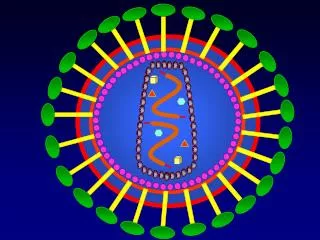
HIV Virus • Believed to be a zoonosis (transmitted from animals) • Found in almost all body fluids • Virus: Cannot replicate outside of a living cell • Enters and damages white blood cells, especially helper T cells (CD4)
Transmission • Unprotected Sex • Maternal to Child Transmission • During pregnancy • Breastfeeding • Sharing of Needles • Blood Transfusions
Risk Factors • STDs • Multiple partners • Partner with a risk factors • Use of alcohol and drugs • Lack of power within the relationship • Women, age
Diagnosis • Rapid diagnosis kits and now the gold standard • Detect HIV proteins • Acquired-Immune Deficiency Syndrome • Low CD4 count • Opportunistic infections • TB • Rare cancers • Rare pneumonias • Overwhelming fungal infections (Candida)
Natural History • Time from infection to significant symptoms (Opportunistic Infections) 5 to 10 years • Time from significant symptoms to death: 3 to 5 years if untreated • AIDS in Africa dominated by “Slim Disease”: chronic diarrhea and weight loss
Weakened Immune System • Opportunistic infections (harmless to normal immune system) • Candida • Pneumocystis • Toxoplasmosis • CMV • Lowered infectious doses for standard pathogens
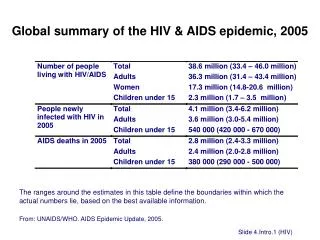
2006 AIDS Statistics • 39 million people infected in the world • 24.7 million in Sub-Saharan Africa • 7.8 million in South East Asia • 2.2 million in Europe and North America • 1.7 million in Latin America • 4.3 million new infections in 2006 • 2.9 million HIV/AIDS related deaths in 2006 • Estimated that around 2million people are receiving ARVs in developing countries
Stages in the Epidemic • Focal: in high risk groups • Commercial sex workers and their clients • Men who have sex with men (MSM) • IV Drug Users (IVDU) • Other high risk occupations: truck drivers, miners, migrant workers • Generalized • General population
Responses • Target messages to high risk groups • Reduce high risk behaviors • Mitigate risk • Counseling and testing • General population • Awareness • Reduction of stigma
TB and Malaria • The AIDS epidemic caused a surge in the TB epidemic • Most PLWHA should be on medication to prevent TB • Hygiene issues associated with TB • People with low grade malaria infections are much more likely to get HIV when exposed • Water issues associated with breeding sites for malaria transmitting mosquitoes
Mitigating Risk • Reduction in number of sexual partners • Decrease in age of first sex • Increase in condom use • Needle cleaning or needle exchange • Male circumcision • Rapid treatment of STDs • Switch infant formula only if it is AFASS. In most low resource settings, HIV+ women should breastfeed • Changes in societal attitudes
The Scourge of Stigma • Prevents people from seeking diagnosis and care • Dying vs Dying from AIDS • In Uganda, the CDC Safe Water System became identified with HIV/AIDS • Use readily available WASH methods
Life with ART Depends on the Quality of Care • Goal: to maximize functional years and delay resistance • Delay ART treatment as long as possible • Criteria • White blood cell count (CD4) • Viral loads • Symptoms • Resistance (what drugs to start on) • Compliance • Monitor • The above plus liver enzymes
Why is it so Difficult to Treat HIV/AIDS? • The virus is protected within cells. • HIV attacks the immune system, the systems that is responsible to eliminating infections. • HIV reproduces rapidly and mutates rapidly. A recipe for drug resistance. • Drugs have to be taken frequently and regularly • Drugs have to be taken for the rest of the patient’s life. • Drugs need to be adjusted for resistance. • Resistance and blood cell count levels, and viral load levels need to be monitored.
Why is it so Difficult to Treat HIV/AIDS? • The drugs have side effects • In addition of ARVs, drugs need to be take to prevent Opportunistic Infections (IOs) • Most PLWHA do not know they are infected. • Even those who know they are infected refuse treatment do to stigma. • HART requires a team of highly trained clinicians and support staff, a strong laboratory system, a good drug stocking. • To prevent resistance, patients usually need to be on three ARVs
Major HIV/AIDS Initiatives • World Bank MAP (Multi-Country AIDS Program): prevention, community based funding, required non-health sectors to be involved • Global Fund: Little technical assistance provided • PEPFAR (USAID): ARV therapy, Prevention of Mother to Child Transmission (PMCT) • WHO 3x5: ARV therapy • Clinton Foundation: ARV therapy
What We Do Know • Improved water can reduce the number and severity of episodes of diarrhea of PLWHA (Increases functional days) • Improved WASH eases the family caregiving burden, especially at the end of life • Issues of disposal of large quantities of HIV infected diarrhea • Infant formula made with improved water can eliminate transmission from breast feeding but ACCESS TO IMPROVED WATER AND FORUMLA MUST BE GUARENTEED FOR AT LEAST 6 MONTHS!! (AFASS)
Key Entry Point: Priority Clients • Higher priority to provide WASH services to symptomatic non-treated PLWHA
Key Entry Point • Mothers and Infants who received PMTCT should receive at least 6 months worth of guaranteed improved water and infant formula
What We Don’t Know: Research Needs • Safe water away from home. • Can sanitation alone or hygiene alone reduce diarrhea in PLWHAs? • Can improved WASH reduce the number of respiratory infections in PLWHAs? • Can improved WASH help maintain weight and nutritional status? • Can improved WASH provided at onset of symptoms delay the need for ART initiation? (delays resistance) • Can improved WASH prolong lifespan? • What has the water sector done internally to mitigate HIV/AIDS?
Job Site Programs • Involve employees and families • Management should take a lead role in • Mandatory sessions • Maintaining confidentiality • Offer services off-site if feasible • Programs should be evaluated and improved on a regular basis
Job Site Program Services • Education • BCC • Reducing stigma • Tackling sexual harassment in the workplace • Making people aware of company rules and benefits • Counseling and testing • Treatment • Care • Death benefits and survivor benefits