The Harlem Renaissance: A New Dawn for African American Dreams
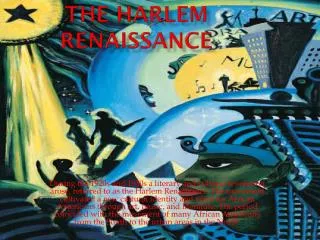
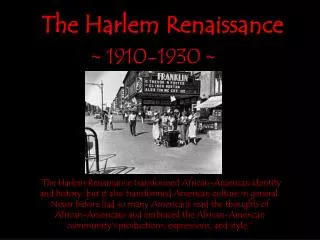
The Harlem Renaissance marked a pivotal era in American history, symbolizing the closest stride towards racial equality. This vibrant cultural movement allowed African Americans to express themselves freely in Harlem, transforming their identities and dreams. Prominent figures like Langston Hughes emerged, renowned for his poignant poetry that captured the essence of daily African American experiences. His poem "Dreams" emphasizes the importance of holding onto aspirations, suggesting that life without dreams is akin to a "broken-winged bird." Hughes used metaphor and personification to convey hope amidst struggle.

The Harlem Renaissance: A New Dawn for African American Dreams
E N D
Presentation Transcript
The Harlem Renaissance It was the start of the closest thing we have to racial equality. It was a time when African Americans could go to Harlem and become anything they wanted to.
Langston Hughes • He is famous for his poetry. • He was known for his portrayal of daily African American life. • He had a engagement in the world of Jazz music. • He told people the raw truth of what happened in his poetry.
“Dreams” by Langston Hughes • Hold fast to dreams • For if dreams die • Life is a broken-winged bird • That cannot fly. • Hold fast to dreams • For when dreams go • Life is a barren field • Frozen with snow.
“Dreams” theme + tone • The main idea is to not let go of your dreams because without them you are nothing. • The tone was hopeful.
Poetic Devices of “Dreams” • Metaphor because “For when dreams go. Life is a barren field” • Personification because “For if dreams die. Life is a broken-winged bird”