The Immune System
The immune system is a complex network of biological structures that protects organisms from disease-causing agents. It consists of both innate and adaptive immunity, with innate immunity providing immediate defense against pathogens without specific targeting, and adaptive immunity offering long-lasting protection through immunological memory. Different organisms exhibit varying immune responses, from the primitive systems in cnidarians to the advanced, multifaceted systems in mammals like humans, which include specialized cells like B and T lymphocytes, fostering interdependent relationships with other organ systems.

The Immune System
E N D
Presentation Transcript
The Immune System Kevin Nguyen TJ Johnson
Introduction • A system of biological structures that defends organisms from disease causing particles. • Organisms can have innate immunity alone or with the addition adaptive immunity.
Cnidarians- Jellies • Very primitive immune system. May conduct phagocytosis against foreign particles.
Annelida- Oligochaete (earthworm) • Have innate immunity. Acquires cellular immunity through phagocytosis. • May have spontaneous cytotoxicity.
Arthopoda- Fruit Flies • Develops more complex innate immunity with barrier defenses have hemocytes to perform phagocytosis.
Mammalia- Humans • Have more complex immune system with the addition of adaptive immunity. • Have immunological memories of previous infections. • Includes various interdependent relationships with other organ systems.
Innate Immunity • Occurs in all animals and is immediately active infection exposure. Does not target specific pathogens. No immunological memory.
Innate Immunity (Continued) Barrier Defenses: Internal Defenses:
Adaptive Immunity • Found only in vertebrates and targets specific pathogens. Have immunological memory of previous infection exposure.
Adaptive Immunity (Continued) • The cells are lymphocytes and are formed in the bone marrow. These includes B cells and T cells.
T Cells (Recognition and Response) Helper T Cells Cytotoxic T Cells • Response • Killer
Immune Response • Further exposure to a specific antigen from a pathogen causes the increase production of certain antibodies.
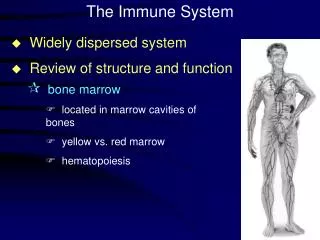
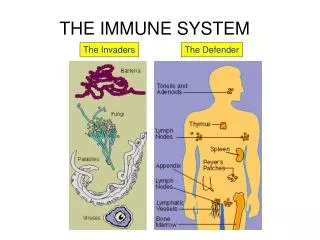
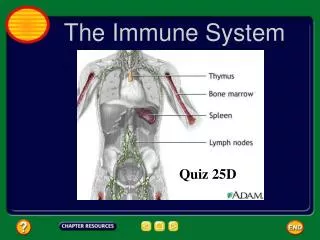
Immune System Structures • Includes: bone marrow, thymus, spleen, and lymph nodes.
Active and Passive Immunity Active Passive • Long lasting immunity, resulted by memorization for specific pathogens. • Short term immunity, where antibodies are transferred from mother to offspring.
Works Cited • Reece, Jane, and Lisa Urry. AP Edition Campbell Biology Ninth Edition. San Francisco: Pearson Benjamin Cummings, 2011. • Wikipedia. Immune System. 23, March, 2012. Web. 21, March, 2012. < http://en.wikipedia.org/wiki/Immune_system> • Universe Review CA. Anatomy of Animals. Web. 22, March, 2012. <http://universe-review.ca/R10-33-anatomy.htm> • The Human Body @ NNHS. Immune System Organs and their Functions. Web. 23, March, 2012. <http://bodywiki.wetpaint.com/page/Immune+System+Organs+and+Their+Functions>. • PubMed Health. Asthma. Web. 25, March, 2012. < http://www.ncbi.nlm.nih.gov/pubmedhealth/PMH0001196/>.