Understanding Bilateral and Multilateral Aid: A Guide to Humanitarian Assistance
This guide explores the complexities of bilateral and multilateral aid, detailing the roles of various entities, including governments and NGOs like Oxfam. It differentiates between short-term emergency relief and long-term development aid, highlighting the importance of providing essentials such as clean water and agricultural support. The advantages of NGOs in delivering flexible assistance are discussed, along with the challenges of inappropriate aid, such as tied aid and long-term food dependence. Discover how such initiatives respond to crises and seek to improve living standards globally.

Understanding Bilateral and Multilateral Aid: A Guide to Humanitarian Assistance
E N D
Presentation Transcript
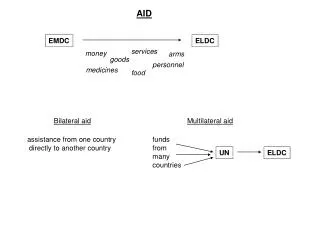
AID EMDC ELDC services money arms goods personnel medicines food Bilateral aid Multilateral aid assistance from one country directly to another country funds from many countries UN ELDC
Non-government organisations: assistance from charities such as Oxfam, Brot für die Welt, etc. funds from donations support of small-scale, local, self-help projects advantages of NGOs: - more flexible - less dependent on political considerations but: they usually have less money
Short-term aid Long-term aid (emergency relief) (development aid) usually after natural disasters (droughts, floods etc.) provided to improve the long-term standards of living provided to keep people alive e.g. - improvements to provide clean water - agricultural programmes Project aid Programme aid for particular schemes large-scale assistance e.g. a small irrigation project e.g. - debt repayment - technical help
Inappropriate aid: - tied aid - long-term food aid - change of eating habits through EU wheat further examples?