Understanding Reading Fluency: Key Components and Strategies for Improvement
Reading is a multifaceted skill that includes phonological awareness, phonemic awareness, fluency, vocabulary development, and comprehension. Fluency is vital for all readers, from young children developing oral language to transitional and fluent readers tackling new genres. Non-fluent readers struggle with processing text, leading to missed meanings. To build fluency, various strategies can be employed, such as reading stories, choral reading, and engaging in performances. Additionally, linking reading and writing enhances fluency through practice and appreciation for language.

Understanding Reading Fluency: Key Components and Strategies for Improvement
E N D
Presentation Transcript
What is reading? An Overview
Reading is… • Phonological awareness • Ability to hear and appreciate the sounds of language • Phonemic awareness • Ability to connect sounds to letters • Fluency • Lexicon • Development of vocabulary • Comprehension • Using schema, sensory images, asking questions, inferring, determining importance, synthesizing
Who needs fluency? • Everyone! • Very young children with the development of oral language • Early readers as they are building literacy skills • Transitional readers as text gets more challenging • Fluent readers in new genres
Non-fluent readers • Process visual information slowly • Read word by word • Have inefficient word solving strategies • Miss much of meaning and thus must slow down to understand • Ignore punctuation as a way to construct meaning
Fluency building strategies • Reading stories • Pair reading, taping voice, choral reading, small group instruction or one-on-one instruction • Reciting poems • Performing scripts • Reader’s Theatre • Giving speeches/oral reports • Memorizing/ reciting lines for plays
ways to Build Fluency • Model good oral reading • Overtly teach readers what fluency is at all levels of literacy • Provide oral support for readers • Offer plenty of practice • Encourage fluency through phrasing
Read Aloud… • As you read model specific fluency strategies… • Notice the way I am using dialogue today • How does my voice change with the punctuation I use? • Listen to my voice today. How do I alter my voice as the characters change?
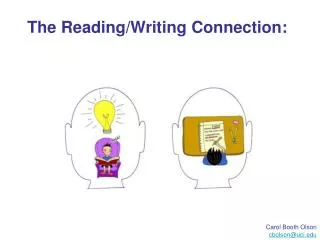
Linking Readingand Writing • Students read aloud from their writing • Through the writing craft discuss author’s intent • Discuss sentence fluency as writers • As students develop an appreciation for language as writers, their ability to manipulate it will increase.
Food For thought… • Fluency happens in writing too! • Handwriting • Lots and lots of writing practice (not worksheets but actual writing!)