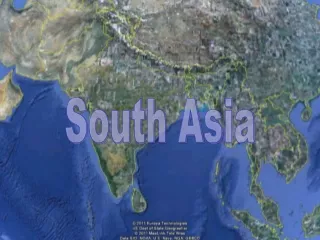
South Asia
170 likes | 403 Views
South Asia. Basics South Asia is also known as the Indian subcontinent (large land mass smaller than a continent) It’s a large triangular peninsula that juts southward from the continent of Asia and is surrounded by three bodies of water Arabian Sea to the west Indian Ocean to the South


South Asia
E N D
Presentation Transcript
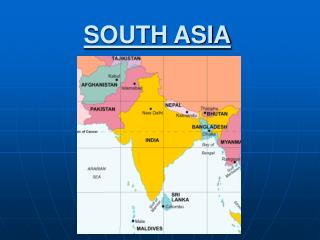
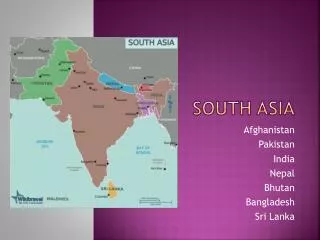
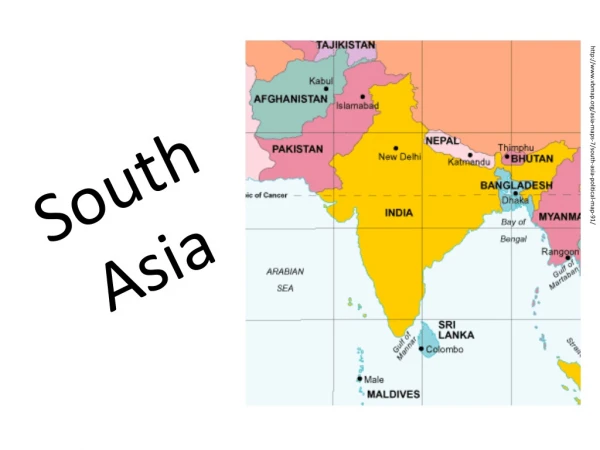
Basics • South Asia is also known as the Indian subcontinent (large land mass smaller than a continent) • It’s a large triangular peninsula that juts southward from the continent of Asia and is surrounded by three bodies of water • Arabian Sea to the west • Indian Ocean to the South • Bay of Bengal to the East
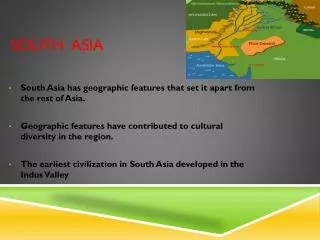
Mountain Ranges • Himalayas • Separate South Asia from the rest of the continent • Stretch 1,500 miles from east to west • 50 mountains are over 5 miles tall • Mount Everest (tallest point in the world) is part of the Himalayas • Hindu Kush • Smaller in area but nearly as high as the Himalayas • Kush means death, showing how tough these are to travel through • Vindhya Mountains • A rugged range, much lower than others in South Asia • The Ghats • Border Deccan Plateau on east and west, named for the many “ghats” or passes
Mountain Passes/Valleys: Although the mountains form a barrier, they can be crossed through passes • Khyber Pass- allows travel through the Hindu Kush mountains • Kashmir Valley is where farmers grow many crops, goats produce a fine wool called cashmere
Rivers • Indus River • Empties into the Arabian Sea • Major river in Pakistan • Ganges River • Begins in Himalayas, joins the Brahmaputra River in Bangladesh and empties into the Bay of Bengal • Most holy river in South Asia
Other Landforms • Indo-Gangetic Plain is south of • Thar Desert covers about 100,000 square miles in India and Pakistan, consists of sand dunes and very little rain, but a little grass grows in some places • Deccan Plateau- (high, flat land) occupies nearly half of South Asia and has many rivers cross through it
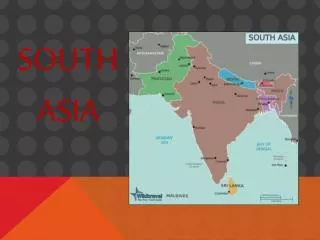
South Asia: Physical Map Use this map to help you label each of the geographic features listed in your notes.