Understanding the Digestive System: Functions, Processes, and Organs
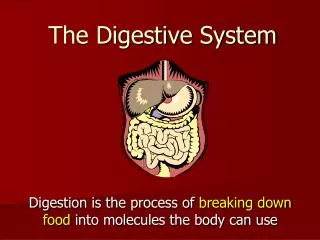
The digestive system breaks down macromolecules into usable substances for the body through four main stages: ingestion, digestion, absorption, and elimination. Starting in the mouth with mechanical and enzymatic actions, food travels through the esophagus to the stomach for further breakdown by gastric juices. Accessory organs like the liver, gallbladder, and pancreas contribute essential enzymes and bile. Nutrient absorption occurs in the small intestine, while the large intestine absorbs water and houses beneficial bacteria, leading to the formation of feces for elimination.

Understanding the Digestive System: Functions, Processes, and Organs
E N D
Presentation Transcript
The Digestive System pg. 324 - 338
Function • The main function of the digestive system is to break down macromolecules into substances the body can use
Digestion • Food provides (most of) the nutrients we need to survive • Food is processed in 4 stages: • Ingestion • Digestion • Absorption • Elimination
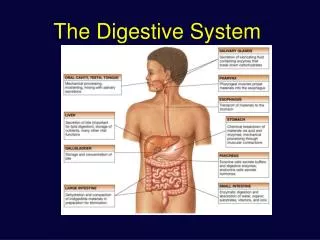
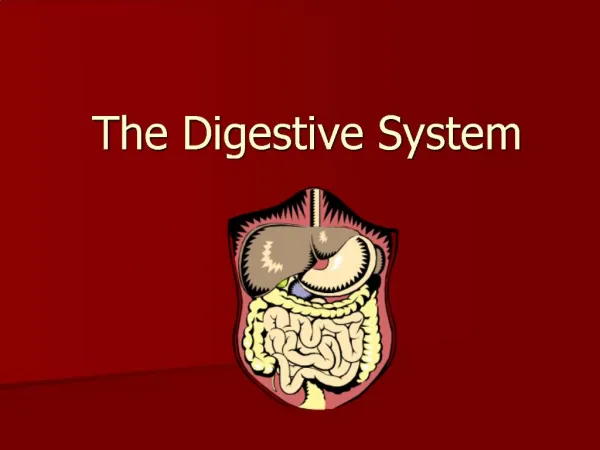
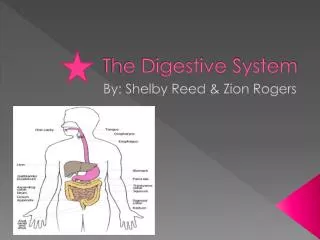
The digestive tract is a tube that runs from the mouth to the anus. Food passes through the tract and its related organs. The accessory organs are ones that assist in the process of digestion, food does not travel through them.
In the mouth... • Digestion begins in the mouth • Mechanical destruction of food • specialized, omnivorous teeth • why do we chew food? • Enzymatic breakdown of food • saliva enzymes break chemical bonds (remember the soda cracker?)
Through the pharynx and esophagus... • Peristalsis occurs in the esophagus and small and large intestines to move food Peristalsis – involuntary smooth musclecontractions that force contents onward
To the stomach... • The human stomach contains complex gastric juices that continue the breakdown of food • These juices contain... • mucus • hydrochloric acid • enzymes
*Just beyond the stomach... • The “chyme” is treated by accessory organs
*Accessory organs • Liver • Produces bile • Gallbladder • adds bile to digest fats • Pancreas • adds additional digestive enzymes • *Kidneys & bladder • remove waste from circulating blood to make urine
Into the small intestine... • In the small intestine (~6m long), macromolecules are digested into monomers and absorbed into the blood stream • Villi & microvillimaximize the absorptivesurface area • Absorption into blood
The large intestine home-stretch... • Unabsorbed materials enter the large intestine (~1.5m long) • Primary roles: • House helpful bacteria • Absorb water • 10 trillion bacterial cells convert undigestible nutrients into things we can use
Finally, the rectum & anus! • Rectum • holding area for feces • absorbs a little water • Anus • sphincter that releases feces
Homeostasis • Define the following: • Cirrhosis • Gall stones • Ulcer • Colon cancer • For the digestive complications above, list their symptoms and treatments
Try these... • In essay format, describe the entire digestive process from eating to defecating, being as descriptive as possible • pg. 353, #1 – 12, 18 – 21, 44, 45 & 47