The Digestive System
The Digestive System. By: Aileen De la Rosa Nicole Hernandez Kristian Perez Shalimar Ramos. Function. Give organisms the needed fuel for energy Break down foods Provide essential nutrients to the body. The Digestive System. The Digestive System.

The Digestive System
E N D
Presentation Transcript
The Digestive System By: Aileen De la Rosa Nicole Hernandez Kristian Perez Shalimar Ramos
Function • Give organisms the needed fuel for energy • Break down foods • Provide essential nutrients to the body
Abbreviations • GERD,GRD • Gastroesphageal reflux disease • GI • Gastrointestinal • HAV • Hepatitis A virus • HBV • Hepatitis B virus • HCV • Hepatitis C virus • NG, N-G • Nasogastric (tube) • PEG • Precutaneous endoscopic gastronomy • TPN • Total parenteral nutrition • VH • Viral hepatitis • Abdomin/o • Abdomen • Bucc/o • Cheek • Chol/e • Gall, bile • Col/o • Colon • Dent/i • Tooth • -emesis • Vomiting • Enter/o • Intestines (small intestines) • Gastr/o • Stomach • Gingiv/o • Gums • Gluc/o • Glucose, sugar • Glyc/o • Glucose, sugar • Hepat/o • Liver • Idi/o • Individual, distinct, unknown • Lapar/o • Abdomen, abdominal wall • Lingu/o • Tongue • Odont/o • Tooth • Or/o • Mouth • -orexia • Appetite • -pepsia • Digestion • Phag/o, -phagia • Eating, ingestion • Proct/o • Rectum, anus • Pyr/o • Heat, fire, fever • Rect/o • Rectum • Sial/o • Saliva • -stalis • Contraction • Stomat/o • mouth
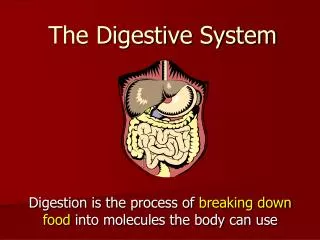
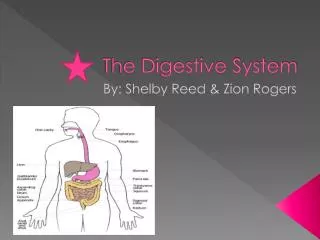
Mouth • receives food as it enters the body, is tasted, broken down by teeth, lubricated and partly digested by saliva.
Tongue • contains taste buds, also aids in chewing and swallowing
Salivary Glands • there are three pairs of salivary glands, the parotid, sublingual, and submandibular, they produce saliva • Saliva moistens food so that it can be swallowed easily
Pharynx • tube that carries both air and food • Carries food to esophagus
Esophagus • muscular tube behind the trachea • It receives bolus (food & saliva mixed together) and carries it to the stomach
Stomach • receives food from esophagus, food remains in there for 2-4 hours • Food is converted into a semifluid material called chyme by all the gastric juices • When food gets into the form of chyme, it leaves the stomach and enters the small intestine
Pancreas • produces pancreatic juices, which contain enzymes to digest food • Enzymes include amylase, trypsin, lipase; which help digest food • The pancreas also produces insulin, insulin regulates metabolism
Gallbladder • stores bile (helps digestion) • when bile is needed to emulsify (mixing) fats in the digestive tract • the gallbladder contracts and pushes bile through cystic duct into common bile duct
Small Intestine • made up of 3 parts, the duodenum, jejunum, and ileum • While food is here, the process of digestion is completed • Products of digestion are absorbed into the bloodstream for use by the small intestine
Large Intestine • final section of alimentary canal, absorbs water and any remaining nutrients
Colon • also called large intestine, ileum connects to the cecum (first part of colon)
Liver • secretes bile, also stores iron and certain vitamins
Appendix • function of it is unknown, sits at junction of the small intestine and large intestine • It is a thin tube about 4 inches long
Rectum • final 6-8 inches of large intestine and is a storage area for indigestibles and wastes
Anus • fecal material is expelled through this opening
Diseases of the Digestive System • Appendicitis • inflammation of the appendix, usually resulting from an obstruction and/or infection • Symptoms include abdominal pain, nausea, vomiting and elevated white blood cell count. • Treatments: Appendectomy (surgical removal of appendix) • 5% of abdominal pain cases turn out to being appendicitis.
Diseases of the Digestive System • Hemorrhoids • painful dilated or varicose veins of rectum and/or anus • Caused by straining to defecate, constipation, pressure on rectum or anus. • Symptoms: Pain, itching, bleeding. • Treatments: high-fiber diet, stool softeners, and hemorrhoidectomy (surgical removal of hemorrhoids) • Hemorrhoids affect up to 86% of Americans and has no age barrier.
Diseases of the Digestive System • Hepatitis • viral inflammation of the liver. • Type A, HAV is highly contagious, transmitted through food or water contaminated by feces of infected person. A vaccine is available and can prevent hepatitis. • Type B hepatitis is transmitted by body fluids including blood, saliva, urine and more. There is also a vaccine that can prevent people from getting this virus. Most health care workers are highly recommended or mandated to get this vaccine. • Type C can also spread through bodily fluids.
Careers • Gastroenterologist • A specialized physician who sees patients who suffer from any issues pertaining to the stomach or intestines. • They are qualified to diagnose and treat any disorders, diseases or irregularities in the digestive system. They perform different types of tests by doing blood work, colonoscopies and endoscopies. • Like any other physician, they must complete medical school, residency and they need to complete a specific advanced degree. • The average salary range is pretty high at about $315,038 per year.
Careers • Dietitian • Someone who is responsible for designing a specific diet for their patients and letting them know the benefits of maintaining a good diet. They usually work with other professionals who help them develop a menu fit perfect for their patient. • They need to study what is wrong with the patients and their reactions from different foods in order to come up with a menu. The dietitian must be at least 18 years old, have a bachelors degree and complete a program authorized by the American Dietics Association. • Over 60% of these individuals make $29,000 - $45,000 per year.
Careers • Proctologist • Surgeons who are trained to do procedures for certain conditions like Anorectic conditions, endoscopy of the colon and rectum, inflammatory bowel disease, and colorectal anal hemorrhoids and colon cancer. • They must earn a bachelors degree, do the MCAT and need to get a medical doctors degree. • Salary usually ranges from $137,344 to $249,550