The Respiratory System
The respiratory system comprises the lungs, bronchi, and trachea which work together to facilitate breathing and gas exchange. The trachea serves as a tube carrying air to the bronchi, where it divides into smaller airways and ends in air sacs surrounded by capillaries for oxygen absorption. Breathing is controlled by the diaphragm and primarily an involuntary process managed by the brain. Various respiratory diseases like asthma, emphysema, and chronic bronchitis can hinder airflow. Factors such as pollution and infections like influenza and tuberculosis can exacerbate these conditions. Prevention includes vaccines to bolster the immune response.

The Respiratory System
E N D
Presentation Transcript
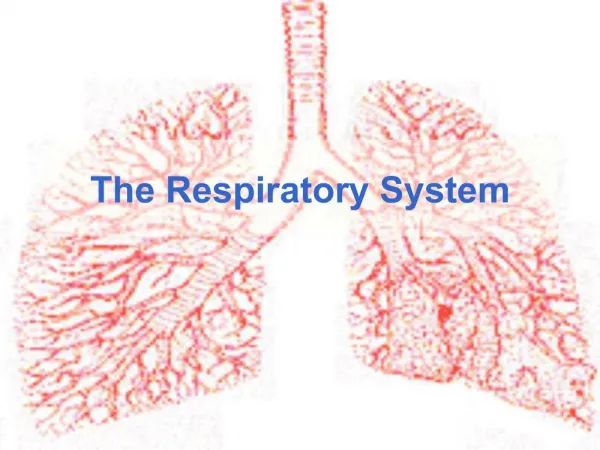
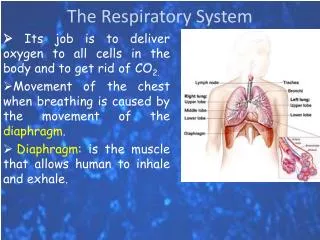
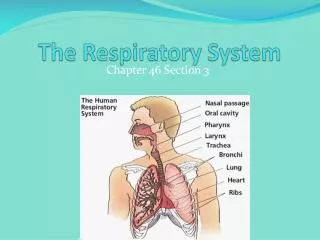
Respiratory System • Made up of lungs, bronchi, trachea, and other structures • Inside the trachea and bronchi are cilia in mucus trap bacteria and dirt from air
Trachea • Tube leading from the throat to the bronchi BRONCHI • Tubes that carry air into the lungs
Gas Exchange • The lungs absorb oxygen from the air • Bronchi are like branches that end with air sacs, these are surrounded by capillaries
Breathing • Sheet of Muscles under lungs = diaphragm • Diaphragm relaxes, they move inwards, air is pushed out = Exhaling • Diaphragm contracts, they move outward and air is pulled into the lungs = Inhaling
Control of Breathing • Breathing is mostly involuntary • The brain controls breathing • carbon dioxide builds up in the blood, a signal goes to the brain, the brain sends a message to your lungs to breath
Respiratory Diseases • Diseases that reduce the flow of air into and out of lungs • Asthma: airway swelling and mucus production • Emphysema: the tiny air sacs in the lungs collapse, less oxygen can reach the blood • Chronic Bronchitis: the tissue in the airway swell
Cause of Respiratory Diseases • Exposure to smoke • Exposure to pollution • Exposure to chlorine in swimming pools
Infection • Colds • Influenza • SARS – similar to a flu but more severe • Tuberculosis – caused by bacteria, infects the lungs but can spread to the bones, and nervous system – can be fatal
Spread of Disease • Epidemic – when a greater than usual number of people in an area get sick • Pandemic – a worldwide epidemic • Prevention: Vaccines – a type of medicine that protects from certain diseases by stimulating the immune system to develop resistance