Download
1 / 8
80 likes | 201 Views
This comprehensive overview of Ancient Egypt highlights its geographic significance, the evolution of kingship, religious beliefs, and artistic conventions. The Nile's role as the "breadbasket" of antiquity facilitated agricultural bounty and political unity. Key themes include the semi-divine nature of pharaohs, the pantheon of Egyptian gods like Isis and Osiris, and the intricacies of the soul in Egyptian belief. It also examines the artistry of funerary customs, the evolution of artistic conventions, and the impactful reign of Akhenaten during the Amarna period.

E N D
Ancient Egypt HST 121: Western Civilization to 1500
Outline • Geography • Kingship • Egyptian religion • Artistic conventions
The Nile • Identity • KMT (Black Land) • Agricultural bounty • Flood patterns
The Nile • Identity • KMT (Black Land) • Agricultural bounty • Flood patterns • Agricultural bounty • “breadbasket” of Antiquity • Political unity • Ease of transportation • Ca. 3200, Upper and Lower Egypt united under one dynasty • Menes/Narmer
Egyptian kingship • Per-aa • Pharaoh • “Great House” • Semi-divine • “god in creation” • “Living Horus” • Responsible for human society to the gods • Maat
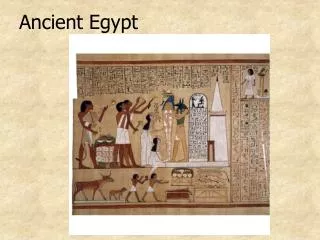
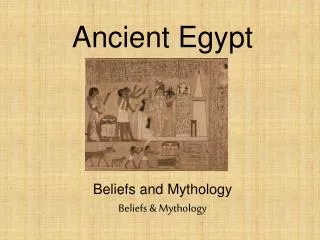
Egyptian religion • Egyptian religion • Pantheon • Isis and Osiris • Egyptian conception of the soul • Ba and ka souls • Egyptian mortuary customs • Mummification • Daily life
Artistic conventions • Mortuary art as a primary source • Their usefulness • Their limitations • The earliest conventions • How they changed • Akhenaten • What he tried to do • How realistic was representational art of the Amarna period?