Download
1 / 10
100 likes | 214 Views
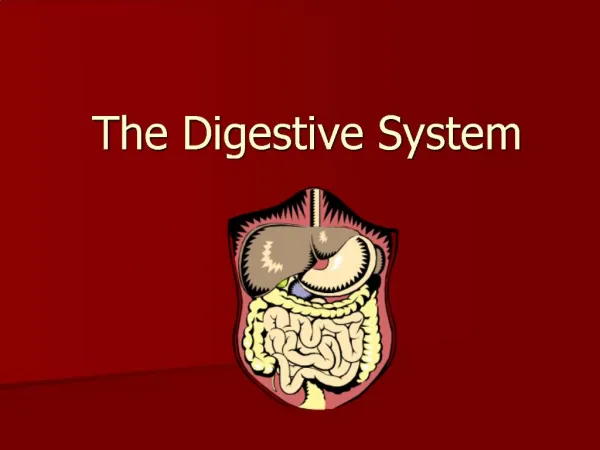
The digestive system serves three primary functions: breaking down food into usable molecules, absorbing these molecules into the bloodstream, and eliminating waste from the body. The digestive process begins in the mouth with mechanical and chemical digestion, followed by the esophagus, where smooth muscle contractions transport food to the stomach. Most digestion and nutrient absorption occur in the small intestine, aided by the liver's bile and pancreas's enzymes. Finally, the large intestine absorbs water, with remaining waste eliminated from the body.

E N D
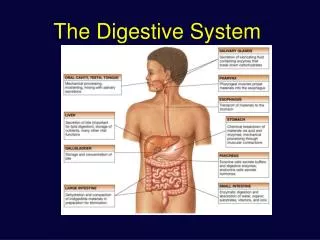
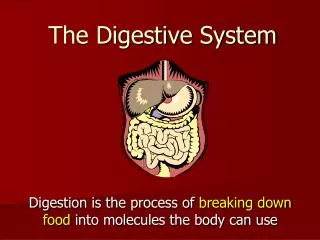
The digestive system has three main functions: • Breaks food into molecules that the body can use. • Molecules are absorbed into the blood and carried throughout the body. • Wastes are eliminated from the body.
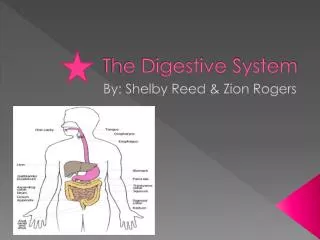
The beginning digestive process • Mechanical and chemical digestion begin in the mouth. • In the esophagus, contractions of smooth muscles push the food towards the stomach. • Most mechanical and some chemical digestion occur in the stomach.
The final digestive and absorption process • Almost all chemical digestion and absorption of nutrients takes place in the small intestine. • Liver - bile - break up fats. • Pancreas - enzymes - breaks down starches, proteins and fats. • In the large intestine, water is absorbed into the bloodstream. The remaining material is eliminated.