Download
1 / 76
760 likes | 879 Views
In this discussion, Dan Cotter, District Conservationist at USDA NRCS in Lafayette County, Wisconsin, addresses the critical trade-off between soil conservation and oil-intensive corn production. Continuous corn cultivation increases tillage and soil erosion, raising concerns about long-term soil health. He highlights the benefits of crop rotation, citing the corn-soybean system as a sustainable alternative on erodible land. Judy Derricks, Conservation Agronomist, emphasizes the power of water in shaping soil quality, noting trends in organic matter decline and erosion rates. Tools like RUSLE2 and the Soil Conditioning Index are vital for assessing soil health.

E N D
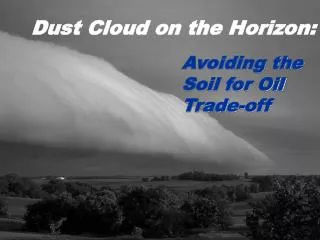
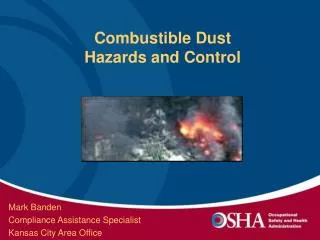
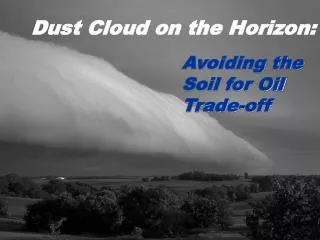
Dust Cloud on the Horizon: Avoiding the Soil for Oil Trade-off
A Word from the Field Dan Cotter District Conservationist USDA NRCS Lafayette County, Wisconsin
More Corn Continuous Corn
Break even point 2005 2007 Income from Market and USDA
Reference point
Reference point Cleared for cropland 2007
Continuous Corn vs Crop Rotation • Continuous corn - more fall tillage • Corn-soybean crop rotation commonly grown using no tillage on highly erodible land
Railroad 1937 Mouth of Grant Potosi Point
1940 Railroad Mouth of Grant Potosi Point
Railroad 1949 Mouth of Grant Potosi Point
1955 Mouth of Grant Potosi Point
1981 Mouth of Grant Potosi Point
1995 Mouth of Grant Potosi Point
1949 2004
Erosion, and Consequences Judy Derricks Conservation Agronomist USDA NRCS Wisconsin
Vulnerable Soil • Declining Organic Matter, Microbial Activity, Soil Structure • When Saturated...loses its ability to stay together ****Test Soil Health and Consolidation
Tools to Measure Soil Loss and Soil Quality • Soil Loss Prediction…RUSLE2 • “T” value • Soil Conditioning Index…SCI
Impacts of Increasing Corn and Tillage • Soil Quality Declines • Erosion Rate Increases • Surface water risk from sediment and nutrients increases