Understanding the Respiratory System: How We Breathe and Hold Our Breath
160 likes | 265 Views
Explore the fascinating world of the respiratory system, where oxygen enters the blood and carbon dioxide is expelled. Discover how long the world record for breath-holding is, how breathing works, and the crucial role of air pathways such as the trachea and bronchi. Learn about the structure of alveoli, where gas exchange takes place, and how factors like age and activity influence our breathing rate. This educational piece will unravel the mysteries of how our bodies breathe and the vital functions of our lungs.


Understanding the Respiratory System: How We Breathe and Hold Our Breath
E N D
Presentation Transcript
Did you know? • How long can you hold your breath for? • The world record for holding breath is 19 minutes and 21 seconds. (this is with inhaling pure oxygen beforehand). Without inhaling before hand is 8 minutes and 58 seconds. • How did he do this? Youtube Clip
What is the role of the respiratory system? • It is where the blood gets it’s oxygen from and where carbon dioxide is taken away. • Animation of Respiratory System (eg. Brainpop)
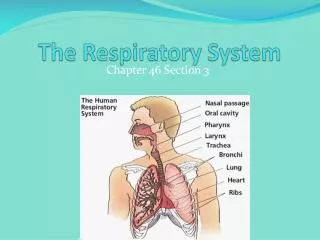
Where does it all start? • When air comes in your nose it gets filtered by tiny hairs (that have mucus on them), the air is moistened and warmed. • Air can also enter through your mouth but here it is not moistened or filtered.
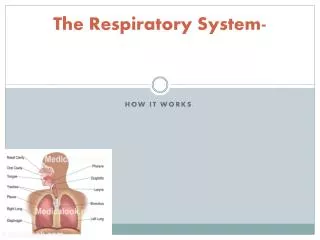
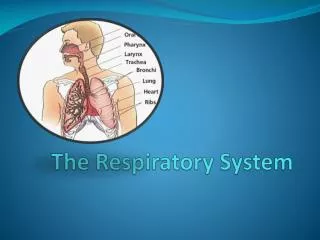
Where are We? Air enters through the nose or mouth and then enters the pharynx MB
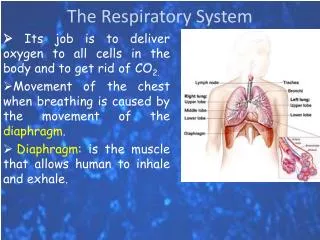
Your pharynx gathers air and then the air is passed down your trachea (windpipe) • Your trachea is a pipe, but is kept open by cartilage rings (similar to bone). It carries air from your throat to your lungs. • If you feel your neck you might be able to feel these rings of cartilage.
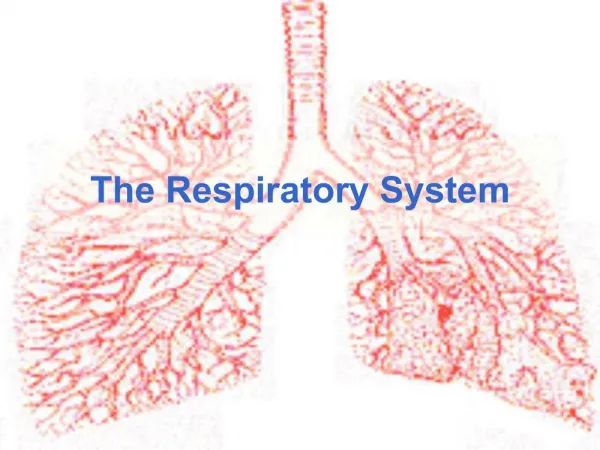
The trachea then breaks into two bronchi tubes. • These tubes then split up into tree like branches called bronchiole. • These tubes get smaller and smaller until they are called alveoli (air sacs) this is where the blood exchanges with the air.
Alveoli and Capillaries Alveoli are covered in blood capillaries.
Respiration Rate • You breathe between 12 and 24 times per minute. • This rate varies with age, physical activity and your mood.
Lung capacity • How do we measure Lung capacity?
So what happens to you ribs when • you inhale? • you exhale?