Chapter 10 Beverages
Chapter 10 Beverages. After Reading and Studying This Chapter, You Should KNOW:. Types of Wines How Wine Is Made Matching Wine With Food Beer The Brewing Process Spirits Nonalcoholic Beverages Beverage Establishments Liquor Liability and The Law Trends. Types of Alcoholic Beverages.

Chapter 10 Beverages
E N D
Presentation Transcript
After Reading and Studying This Chapter, You Should KNOW: • Types of Wines • How Wine Is Made • Matching Wine With Food • Beer • The Brewing Process • Spirits • Nonalcoholic Beverages • Beverage Establishments • Liquor Liability and The Law • Trends
Types of Wines • Wine is fermented juice of grapes • Light beverage wines (White, Rose and Red) • Sparkling wines (Champagne) • Fortified wines (Sherry, Port and Madeira) • Have brandy or wine alcohol added • Aromatic wines (Vermouth and Aperitif) • Flavored with herbs, roots, flowers and barks
Wines • Varietal • Type of grape from which wines are made, and for which they are named • Vintage • Year in which a wine’s grapes were harvested
Light Table Wines • Red Wines • Made from red grapes • Coloring from grape skins • Cabernet Sauvignon and Pinot Noir • Rose • Actually a category of red • Remove skin early in fermentation
Types of Wines • White Wines • Made from white grapes • Age and mature faster than red wines • Chardonnay • Sauvignon Blanc • Pinot Blanc • Riesling • Chenin Blanc
Red Wine • Cabernet Sauvignon • Merlot • Pinot noir • Zinfandel
How Wine Is Made • Crushing • A mixture of grape pulp, skins, seeds and stems • Fermenting • A chemical process by which yeast acts on sugar to produce alcohol and carbon dioxide
How Wine Is Made • Racking • Maturing • Aging a wine • Filtering • Fining • Clarifying • Bottling
Relationship to Food • White Wines • Poultry, fish and egg entrees • Red Wines • Any game or red meat • Sparkling Wines • Any course, from dry to sweet • The heavier the food, the heavier the wine
Relationship to Food • Champagne can be served throughout a meal • When a dish is cooked with wine it is best served with that wine • Sweet wines should be served with foods that are not too sweet • Always follow guest preference and the GUEST is ALWAYS right!
Describing a Wine • Use of textures • Softness and smoothness • Richness and thickness • Correspond to touch and temperature • Use of flavors • Fruity, minty and herbal • Nutty, cheesy and smoky • Correspond to use of nose and tongue
New Traditions • Serve lighter wines before full-bodied ones • Pair light-bodied wines with lighter food and fuller-bodied wines with heavier, richer or flavorful ones • Match flavors
New Traditions • Delicately flavored foods that are poached or steamed should be paired with delicate wines • Match regional wines with regional foods • Soft cheese like Camembert and Brie pair well with a variety of red wines
Wine Producing Regions • Europe • France • Bordeaux and Burgundy • Champagne and Cognac • Italy • Chianti • Germany • Riesling • Spain • Sherry • Portugal • Port
Wine Producing Regions • America • California • North and Central Coast • Napa and Sonoma • Great Central Valley • Southern California • New York • Oregon and Washington
WORLD Wine Producing Regions • Canada • Australia • South America • South Africa
Types of Beers • Lager • Clear, light bodied • Ale • Fuller bodied, more bitter • Stout • Dark ale, sweet, strong malt flavor • Pilsner • Style of beer brewing
Malt Beverages • Brewing Process • Water • Malt • Ground barley • Yeast • Fermenting agent • Hops
TheBrewingProcess • The brewing process begins with water. • Next, grain is added in the form of malt (barley that has been ground to a course grit). • The grain is germinated, producing an enzyme that converts starch into fermentable sugar. The yeast is the fermenting agent. • The malt then goes through a hopper into a mash tub, which is a large stainless steel or copper container. • Here the water and grains are mixed and heated. Chapter 10 - Beverages
TheBrewingProcess • The liquid is now called wort and is filtered through a mash filter or lauter tub. • This liquid then flows into a brewing kettle, where hops are added and the mixture is boiled for several hours. • The hop wort is filtered through the hop separator or hop jack and is pumped through a wort cooler flowing into a fermenting vat where pure-culture yeast is added for fermentation. • The brew is aged for a few days prior to being barreled for draught beer or pasteurized for bottled or canned beer. Chapter 10 - Beverages
Microbreweries • Microbreweries • Smaller breweries • Locally made and distributed • Rock Bottom • Karl Strauss • Sierra Nevada • Samuel Adams • Gordon Biersch • Brew Moon
Spirits • Spirits or Liquor • Liquid that has been fermented and distilled • Proof • Liquor’s alcohol content • In U.S. proof is twice the % of alcohol
Whiskey • Made from a fermented mash of grain to which malt, in the form of barley, is added • Scotch Whiskey • Smokey Kilns • Irish Whiskey • Not dried, milder • Bourbon Whiskey • Corn mixed with rye • Canadian Whiskey • From corn
White Spirits • Gin • From juniper berries • Rum • Light is from sugarcane • Dark is from molasses • Tequila • Vodka • Lacks color, odor and flavor
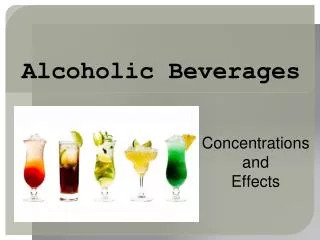
Other Spirits and Cocktails • Brandy • Distilled from wine • Cognacs from France • Cocktails • Drinks made by mixing 2 or more ingredients • Stirred, shaken or blended
Trends in Nonalcoholic Beverages • Nonalcoholic beer and wine • Coffee • Tea • Carbonated soft drinks • Juices • Bottled water
Bars and Beverage Management • Physical bar setup • Critical for effectiveness • “Stations” properly placed • Location of “well” versus “call” brands
Different Types ofBeverage Establishments • Restaurant bars • Hotel bars • Night clubs • Microbreweries • Sports bars • Coffee shops Mr. White’s son JEFF
Nightclubs • A popular place to go to get away from the stresses of everyday life for a long time. • A risky business. • Requires a considerable time commitment. • Owners should study demographics, market attitude, and social dynamics. • A new concept is critical to success.
Sports Bars • Evolved into a large industry • Sales in bars and taverns increased $3 million between 1990 and 2000 • Diverse clientele • More family oriented • Games and family-friendly menus • Latest version of a traditional arcade • Menu has evolved • Satellites and digital receivers
Liquor Liability and the Law • The bar is liable if • They serve a minor • They serve a person who is intoxicated • Dram shop law • Bar is liable for injuries caused by intoxicated customers
Trends • Comeback of cocktails • Designer bottled water • Microbreweries • More wine consumption • Increase in coffee houses and coffee intake • Increased awareness and action to avoid irresponsible alcoholic beverage consumption