Essential Steps for Safe Boating and Watercraft Operation
60 likes | 167 Views
Ensuring safety while boating or operating personal watercraft (PWC) involves identifying and controlling various hazards. Key steps include recognizing dangers like collisions, poor weather, alcohol use, and inexperienced operators. Implement strategies such as requiring personal flotation devices (PFDs), assigning lookouts, and practicing man-overboard drills. Supervise the environment, monitor for changes, and enforce safety rules like zero tolerance for alcohol and safe speed limits. Take a Safe Boating Course and dive with a buddy, emphasizing communication and adherence to safety protocols.


Essential Steps for Safe Boating and Watercraft Operation
E N D
Presentation Transcript
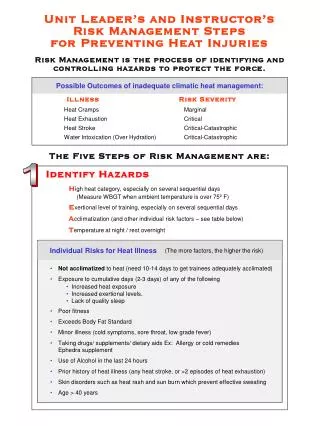
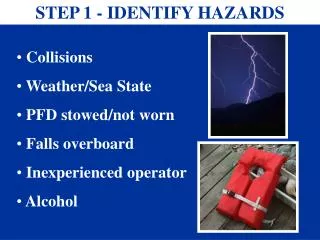
STEP 1 - IDENTIFY HAZARDS • Collisions • Weather/Sea State • PFD stowed/not worn • Falls overboard • Inexperienced operator • Alcohol
STEP 4 - IMPLEMENT CONTROLS HAZARDSCONTROLS • Collisions Remain alert; Assign and rotate • Look-out position • PFDs Keep throwable PFD within reach; • Require crew to wear PFD • Alcohol “Zero tolerance”; Don’t’ drink and • boat • Falls overboard Non swimmers wear PFD; Practice • man over board drill
STEP 4 - IMPLEMENT CONTROLS HAZARDSCONTROLS • Inexperienced operator Take a Safe Boating Course; Learn • “the rules of the road” • Weather/Sea State Monitor weather conditions
STEP 5 - SUPERVISE • Stick to the controls you have implemented. When • change occurs, reassess the situation and add the • appropriate control. • Direct supervision - spot checks • >Ensure PFDs are worn • >Monitor changes in weather • >Monitor for sunburn • >Monitor horseplay
PERSONAL WATERCRAFT (PWC) • SAFETY TRAINING • DEAD MAN SWITCH • PFD • NO WAVE/WAKE JUMPING • DO NOT RIDE IN SWIM AREAS • DO NOT EXCEED POSTED SPEED LIMIT • OBSERVE SAFETY RULES
SCUBA DIVING Certification Dive with a buddy Two-thirds rule Dive tables Hand signals Don’t let the risks manage you