Understanding Minerals: Definitions, Characteristics, and Uses
This chapter explores the fundamental aspects of minerals, defining them as naturally occurring inorganic solids with defined structures. It covers the five essential characteristics that all minerals share: being inorganic, solid, having a unique chemical composition, and forming atomic patterns. This chapter also delves into the classification of minerals, their physical properties, and identification methods. Furthermore, it discusses the economic significance of minerals, including gems and ores, and introduces titanium, a lightweight and durable metal, along with its various applications.

Understanding Minerals: Definitions, Characteristics, and Uses
E N D
Presentation Transcript
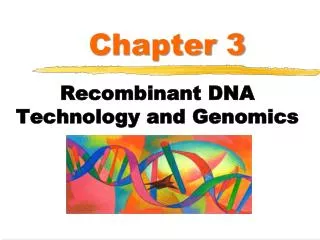
Chapter 3 Minerals
3.1 Minerals • What is a Mineral? • Definition – a naturally occurring, inorganic solid with a definite structure and composition • All minerals share five characteristics • Inorganic and Naturally Occurring Minerals • 1st characteristic – all minerals form from natural processes
3.1 Continued • 2nd characteristic – minerals are inorganic • Not alive, never were, and not formed by life processes • Do not contain carbon • Mineral resource – term used by miners that means anything taken from the ground that has commercial value
3.1 Continued • Crystalline Solids • 3rd characteristic – all are solids • Have definite volume and shape • 4th characteristic – every mineral is an element or compound with a chemical composition unique to that mineral
3.1 Continued • 5th characteristic – atoms in a mineral are arranged in a pattern that is repeated over and over again • Mineraloid – a mineral-like substance that does not have atoms arranged in a definite structure
3.1 Continued • The Structure of Minerals • Crystal – a solid in which the five atoms are arranged in repeating patterns • Know table 3-1 • Know the crystal pattern and examples
3.1 Continued • Crystals • The size of the crystal formed depends on the space it has to grow in • Small area the crystals will be small • Open area the crystals will be large
3.1 Continued • Mineral Compositions and Groups • 90 elements are found in the Earth’s crust • Only 8 elements make up 98% of the Earth’s crust • Of the 4000 minerals, only a few dozen are common • Formed from the 8 common elements • Most of the rock-forming minerals are silicates
3.1 Continued • Silicates • Are minerals that contain silicon and oxygen and usually one or more other elements • Silicone and oxygen are the most abundant elements in the Earth’s crust • Other minerals are classified based on their composition
Major groups of minerals Carbonates Oxides Sulfides Sulfates Halides Hydroxides Phosphates Native elements 3.1 Continued
3.2 Mineral Identification • Physical Properties • Appearance • What the mineral looks like • Texture, color, and other visual observations • Hardness • How easily can the mineral be scratched
3.2 Continued • Diamonds are the hardest mineral • Diamonds can only be cut by other diamonds • Measured on a scale of 1 to 10 called Moh’s hardness scale • 1 is the softest and 10 is the hardest • Use common objects with known hardnesses to determine unknown minerals hardness
3.2 Continued • Luster • Describes how light is reflected from a mineral’s surface • Defined as metalic or nonmetallic • Metalic – shine bright like a metal • Nonmetallic – dull and does not shine like a metal
3.2 Continued • Color • Some minerals have a distinctive color • Most of the time color is not the determining factor to identifying the mineral
3.2 Continued • Streak • When the mineral is dragged across a surface, it will leave behind a powder • Main test used to distinguish between pyrite and gold • Only works with minerals softer than the unglazed porcelain tile
3.2 Continued • Cleavage and Fracture • The way a mineral breaks apart will leave behind a distinctive pattern • Cleavage – when a mineral breaks into smooth flat surfaces • Fracture – those minerals that break with rough or jagged edges
3.2 Continued • Other Properties • Some minerals have properties that are unique only that mineral • Magnetite – has a magnetic properties • Calcite – when light passes through it you see double images
3.3 Uses of Minerals • Gems • Properties of Gems • Are highly valuable minerals • Usually valuable because they are rare or have a high economic demand • Usually bright and colorful • Usually have a crystal patterns that allows the mineral to be cut into different patterns and be polished
3.3 Continued • Ores • A mineral that contains a useful substance that can be mined for a profit • Aluminum comes from the mineral ore bauxite • The products from ores are worth more than the ore itself
3.3 Continued • Waste Rock Removal • Waste rock is the unwanted material that is mined with the ore • Must be removed before the ore can be mined • Once the waste rock removal cost is higher than the value of the mineral being mined will no longer be classified as an ore
3.3 Continued • Types of ores • Iron from hematite • Zinc from sphalerite • Copper from chalcophyrite • Malachite and azurite are gemstone ores of copper
3.4 Uses of Titanium • Titanium • Is a durable, lightweight metal derived from minerals such as ilmenite or rutile • Properties of Titanium • Durable, lightweight, nontoxic
3.4 Continued • Uses of Titanium • Hip replacements • Wheelchairs • Tennis rackets • Airplanes • automobiles
3.4 Continued • Ilminite and Rutile • Two types of titanium ores • Methods used to remove titanium from its ores • First method • Ilminite is dissolved in sulfuric acid • Produces titanium dioxide and iron sulfate
3.4 Copntinued • Second method • Rutile is combined with chlorine at high temperatures • Produces titanium tetrachloride “tickle” • Second method is becoming more popular because the iron sulfate is harmful to the environment