
The Evolution and Usage of "Like" in Modern English

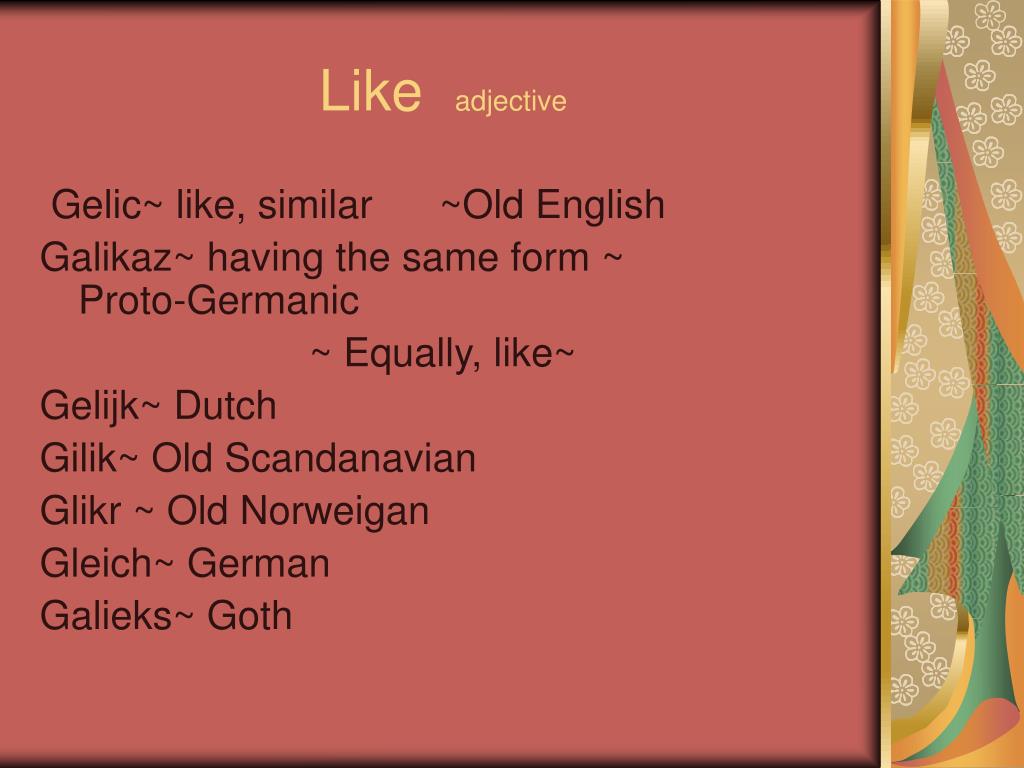
"Like" has evolved significantly from its Old English origins, where it meant 'similar' or 'pleasing'. Initially used as an adjective and verb in the 11th century, it has transformed into a multifunctional word in contemporary slang. Commonly employed as a filler in conversation, it conveys attraction or comparison, often marking informal speech among younger generations. From Chaucer's time to modern-day American English, "like" is ubiquitous in everyday dialogue, reflecting changes in linguistic preferences and social interactions.
Download Presentation 
Download Policy: Content on the Website is provided to you AS IS for your information and personal use and may not be sold / licensed / shared on other websites without getting consent from its author.Content is provided to you AS IS for your information and personal use only. Download presentation by click this link. While downloading, if for some reason you are not able to download a presentation, the publisher may have deleted the file from their server.During download, if you can't get a presentation, the file might be deleted by the publisher.
E N D