Download

1 / 11
130 likes | 264 Views
The excretory system is critical for eliminating metabolic wastes and maintaining homeostasis. This system includes key organs such as the kidneys, ureters, urinary bladder, and urethra. The kidneys filter waste-laden blood, removing substances like urea and excess water, and returning filtered blood to circulation. This process also impacts drug excretion, and the health of the kidneys is vital since damage can lead to severe consequences, including the need for dialysis or transplantation. Learn about kidney stones and the importance of kidney health.

E N D
Link 2 minutes Link 3:47 minutes the kidneys Link 5 minutes The Excretory System
Excretion • Excretion – the process by which metabolic wastes are eliminated • One part of the many processes that maintain homeostasis. • Every cell in the body produces metabolic wastes, such as excess salts, carbon dioxide, and urea
Functions of the Excretory System • The Kidneys Maintain Homeostasis By: • Remove waste products from the blood • Maintain blood pH • Regulate the water content (blood volume) of the blood • Produces and eliminates urine
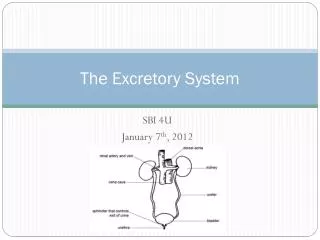
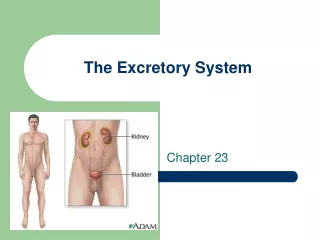
Main Organs of the Excretory System • Kidneys • Ureters • Urinary Bladder • Urethra
The Kidneys • Located on either side of the spinal column near the lower back. • What does a kidney do? • Waste laden blood enters the kidney through the renal artery. • The kidney removes urea, excess water, and other waste products and then passes them to the ureter. • The clean, filtered blood leaves the kidney through the renal vein and returns to circulation.
Ureter • A tube, called the ureter, leaves each kidney carrying urine to the urinary bladder
Urinary Bladder • The urinary bladder is a saclike organ where urine is stored before being excreted.
Urethra • Urine is stored in the urinary bladder until it can be released from the body through a tube called the urethra.
Kidneys and Drugs • When blood is filtered, many drugs are removed from the circulation. • Why the effects of drugs wear off over time. • Drugs, legal and illegal, become concentrated in the urine, providing a quick and easy way to test for their presence.
Kidney Stones • Sometimes substances such as calcium, magnesium, or uric acid salts in the urine crystallize and form kidney stones. • When kidney stones block the ureter they cause great pain. • Often treated using ultrasound, in which the sound waves pulverize the stones into smaller fragments
Kidney Damage • Humans have two kidneys and can survive with only one. • If both kidneys are damaged by disease or injury, there are two ways to keep an individual alive. • Kidney Transplant • Kidney Dialysis Machine • Expensive • Time consuming (three times per week for a few hours)