Download

1 / 6
60 likes | 245 Views
Wetlands are diverse aquatic habitats found worldwide, typically in lowland areas characterized by nutrient-rich soils and an annual rainfall of about 59 inches. Temperatures can range from -60°F to 122°F, leading to unique ecosystems without a single defining climate. They support various plant species, including cattails and water lilies, and numerous animals, such as alligators and bald eagles. Adaptations among both flora and fauna allow them to thrive in these water-saturated environments, where water serves as the vital abiotic factor that sustains life.

E N D
WETLANDS BY OMAR AND ADAM
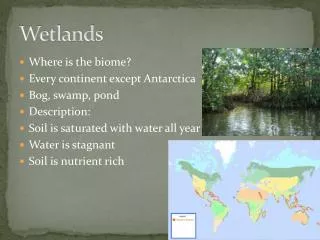
Geography & Climate Location: all over the world in lowland areas Description: a wide variety of aquatic habitats Soil type: nutrient Precipitation: about 59 inches of rain per year Temperature range: -60`F to 122`F Climate: does not have a characteristic climate
Biodiversity Plant species: cattails, bulrushes, sedges, arrowheads, water lilies, duckweed, Canada waterweed, blue flag, specked alder, winterberry holly Animal species: alligator, bald eagle, beaver, bobcat, cougar, crayfish, earthworm, frog, raccoon,
Adaptations Plant: adapt to the extra water surrounding them by knowing a limitation of water they absorb Animal: adapt to living in water by trying their best to be able to swim
Interactions Water is the main abiotic factor that all the biotic factors depend on. It can speed up animals or slow them down. Both plants and animals don’t really compete for water because they have a abundance of water constantly around them