Understanding Rock Types: Igneous, Metamorphic, and Sedimentary Processes
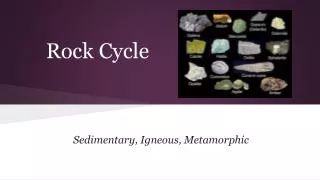
This informative overview explores the three main rock types: igneous, metamorphic, and sedimentary. Igneous rocks, formed from molten material, can be either extrusive (fine-grained) or intrusive (coarse-grained). Metamorphic rocks undergo changes in composition and texture due to heat and pressure, with processes varying from low to high pressure metamorphism. Sedimentary rocks are classified by their formation environment and include various types such as mudrocks and coal. Discover the significance of these rocks and what they reveal about Earth’s history.


Understanding Rock Types: Igneous, Metamorphic, and Sedimentary Processes
E N D
Presentation Transcript
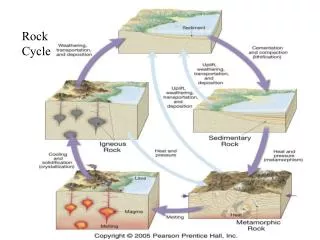
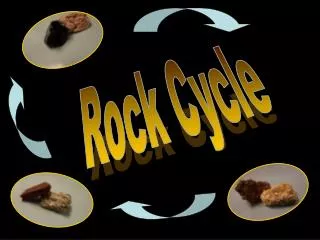
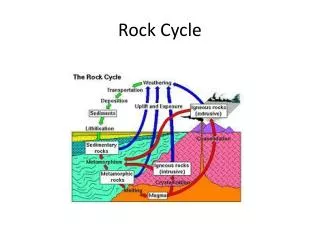
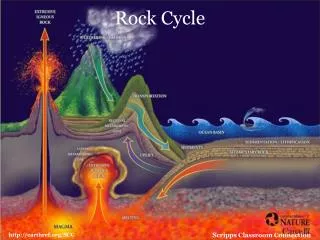
Rock Cycle http://www.uwgb.edu/dutchs/EarthSC-202VisualsIndex.HTM
Igneous Rocks Cool from the Molten State • Extrusive -- Erupted on Surface (volcanic) • Intrusive -- Solidify Within Earth (Plutonic) Large Grain Size ---> Slow Cooling • Extrusive Rocks -- Fine Grained • Intrusive Rocks -- Coarse Grained
Metamorphism Changes in Rock Composition or Texture Due to Heat, Pressure and Action of Fluids (like magma)
Contact Around Intrusions Shallow: 0-6 Km Low Pressure Local Regional Wide Areas 5-20 Km, Sometimes 30+ High Pressure Usually Accompained by Deformation Types of Metamorphism
Sedimentary Rocks Deposited on or Near Surface of Earth by Mechanical or Chemical Processes
Environmental Clues in Sedimentary Rocks • Fossils • Salt Water - Corals, Echinoderms • Fresh Water - Insects, Amphibians • Terrestrial - Leaves, Land Animals • Color And Chemistry • Red Beds - Often Terrestrial • Black Shale - Oxygen Poor, Often Deep Water • Evaporites – Arid Climates
Sediment Sizes and Clastic Rock Types Sedimentary rocks made of silt- and clay-sized particles are collectively called mudrocks, and are the most abundant sedimentary rocks.