Exploring the Three Rock Types: Igneous, Sedimentary, and Metamorphic
Discover the fascinating world of Earth's rocks! This guide delves into the three main rock types: igneous, sedimentary, and metamorphic. Igneous rocks, formed from cooled lava, can have crystals of varying sizes depending on cooling speed, with examples like granite and obsidian. Sedimentary rocks arise from the compaction of weathered materials and showcase visible layers, including conglomerates and limestone. Metamorphic rocks form under intense heat and pressure deep within the Earth's crust, revealing the dynamic processes shaping our planet.


Exploring the Three Rock Types: Igneous, Sedimentary, and Metamorphic
E N D
Presentation Transcript
Elements Around Us Earth’s ATMOSPHERE
Elements Around Us Earth’s OCEANS
Elements Around Us Earth’s CRUST
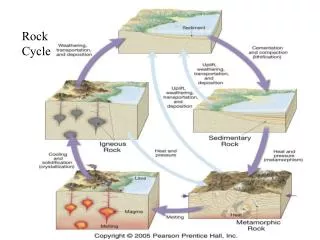
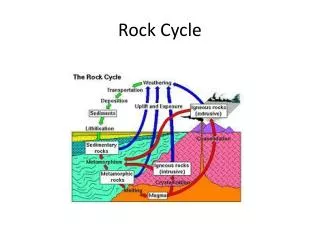
IGNEOUS ROCKS • Forms from cooled lava. • Most have crystals… the size of the crystal depends on how fast the lava cooled. - Slow cooling = large crystals - Fast cooling = small to microscopic • Some rocks have pores (like a sponge) from the gases in the lava escaping during the cooling process.
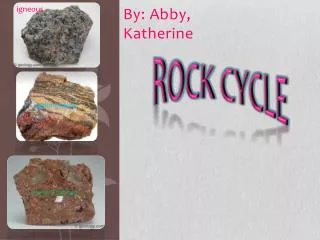
IGNEOUS ROCKS Granite Obsidian Pumice Gabbro
SEDIMENTARY ROCKS Sediments that have deposited will be compacted and cemented together. Formed from weathered igneous, sedimentary, and metamorphic rocks… that’s where the sediment comes from!!! • Usually layers can be seen. • Some are conglomerates… i.e. you can see smaller rocks or shells embedded.
SEDIMENTARY ROCKS Conglomerate Shale Limestone Banded-Sandstone
METAMORPHIC ROCKS Formed deep within the Earth’s crust… rocks that undergo an extreme amount of heat and pressure.