Navigating Conflict as a Student Leader: Strategies for Success
Conflict is an inevitable part of leadership, especially for student leaders facing diverse perspectives. Students often confront disagreements due to differing backgrounds, needs, and visions. This guide explores our instinctual responses to conflict—fear, avoidance, aggression, or enjoyment—and emphasizes the essential leadership skills: listening, empathy, honesty, and risk-taking. To effectively resolve conflict, adopt a win/win mentality by listening to all parties, fostering open dialogue, and creatively exploring solutions. Embrace conflict as an opportunity for growth and collaboration.

Navigating Conflict as a Student Leader: Strategies for Success
E N D
Presentation Transcript
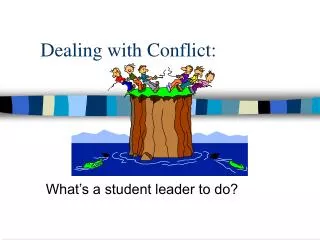
Dealing with Conflict: What’s a student leader to do?
What is conflict? • The sudden realization that someone, somewhere, isn’t as smart as we are and is suggesting something utterly opposed to our brilliant thinking.
Why conflict? • We come from different backgrounds • We all have different needs • We may have different visions
What’s our response? • Fright • Flight • Fight • Delight
What about leadership? • Skills of the leader: • Listening • Loving • Liberating • Telling the truth • Taking risks
So what do I do when I encounter conflict? • What’s going on here? • Why is this happening? • What will happen if this continues? • What am I willing to do?
I WIN, YOU LOSE I LOSE, YOU WIN I LOSE, YOU LOSE I WIN, YOU WIN OPTIONS:
DOING WIN/WIN: • LISTEN TO BOTH SIDES • LET THEM TALK • THINK CREATIVELY • DON’T TAKE SIDES • LET EVERYONE HAVE SOMETHING