Classification
This chapter explains the principles of taxonomy, detailing how organisms are classified based on various characteristics such as morphology, behavior, geographical distribution, and molecular data, including DNA sequencing and chromosome comparisons. It highlights the binomial nomenclature system developed by Linnaeus in the 1700s, which helps avoid confusion among biologists by systematically naming species using a two-part name (Genus species). The text also covers the hierarchical classification system ranging from domain to species, underscoring its importance in biological sciences.


Classification
E N D
Presentation Transcript
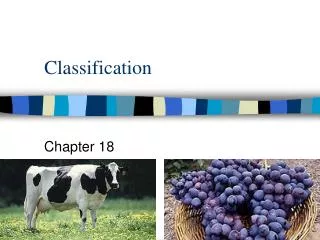
Classification Chapter 17
Taxonomists: group and name organisms based on characteristics • Morphological • Behavioral • Geographical Distrubution • Molecular • Chromosome comparisons • DNA sequences
Linnaeus -1700’s • Developed binomial nomenclature system • Avoid confusion among biologists • Ex. Sweet pepper=bell=green=mango • Genus species • Species name is an adjective describing • Ex. Homo sapiens = human wise • Ex. Betula alba = birch white • Ex. Betula lutea = birch yellow • Genus in caps, species lower case • Italics in print, underline when hand written • Genus can be abbreviated when used repeatedly
Linnaeus -1700’s • Developed levels of classification that range from general to specific • Domain Kindgom phylum class order family genus species • Remember: Dignified King Phillip Came Over From Greater Spain
Section 17.1 Summary – pages 443-449 Taxonomic rankings • Compare the appearance of a lynx, Lynx rufus, a bobcat, Lynx canadensis, and a mountain lion, Panthera concolor. Mountain lion Lynx Bobcat
Section 17.1 Summary – pages 443-449 Domain Eukarya Kingdom Animalia Chordata Phylum Class Mammalia Carnivora Order Felidae Family Lynx Genus Species Lynx canadensis Lynx rufus Lynx Bobcat
Question 1 According to the table, at what level does the domestic cat diverge from the ferret? Classification of Representative Mammals Kingdom Animalia Animalia Animalia Phylum Chordata Chordata Chordata Class Mammalia Mammalia Mammalia Order Cetacea Carnivora Carnivora Family Mysticeti Mustelidae Felidae Genus Balenopora Mustela Felis Species B. physalus M. furo F. catus Blue Whale Ferret Domestic cat Common Name To return to the chapter summary click escape or close this document.
The answer is C. The domestic cat belongs to the family Felidae and the ferret belongs to the family Mustelidae. Classification of Representative Mammals Kingdom Animalia Animalia Animalia Phylum Chordata Chordata Chordata Class Mammalia Mammalia Mammalia Order Cetacea Carnivora Carnivora Family Mysticeti Mustelidae Felidae Genus Balenopora Mustela Felis Species B. physalus M. furo F. catus Blue Whale Ferret Domestic cat Common Name To return to the chapter summary click escape or close this document.
Question 2 How many levels of classification do all three animals share? Classification of Representative Mammals Kingdom Animalia Animalia Animalia Phylum Chordata Chordata Chordata Class Mammalia Mammalia Mammalia Order Cetacea Carnivora Carnivora Family Mysticeti Mustelidae Felidae Genus Balenopora Mustela Felis Species B. physalus M. furo F. catus Blue Whale Ferret Domestic cat Common Name To return to the chapter summary click escape or close this document.
Section 1 Check Question 2 Which taxon contains the fewest species? A. genus B. family C. order D. phylum The answer is A, genus.
Section 1 Check Question 3 For which of the following species names does the specific epithet mean “handy?” A. Homo sapiens B. Homo erectus C. Australopithecus anamensis D. Homo habilis The answer is D.
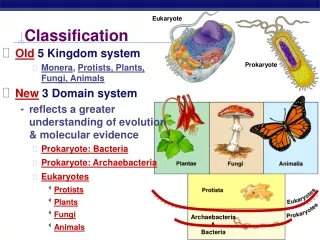
Aristotle: • Based on plant/animal, and land/water/air • 5 Kingdom System (Whittaker 1969) • Based on • Prokaryote/Eukaryote • Single/multicellular • Autotroph/heterotroph • Currently: 6 kingdom system with two groups of prokaryotes
Section 1 Check The answer is B. The organisms were grouped together because of their wings, which, in this case, are analogous structures.
Section 17.2 Summary – pages 450-459 Structural similarities • For example, plant taxonomists use structural evidence to classify dandelions and sunflowers in the same family, Asteraceae, because they have similar flower and fruit structures.
Section 17.2 Summary – pages 450-459 Chromosome comparisons • For example, cauliflower, cabbage, kale, and broccoli look different but have chromosomes that are almost identical in structure.