Understanding India's Subcontinent and Ancient Caste System
120 likes | 251 Views
India is a vast subcontinent that extends into the Indian Ocean. Its climate is significantly influenced by seasonal monsoons. The ancient society was shaped by the arrival of the Aryans, who migrated from Central Asia. They established a structured caste system that categorized society into distinct classes, including Brahmins (priests), Kshatriyas (warriors), Vaishyas (traders), Sudras (servants), and the Harijans (outcastes). This rigid system dictated social roles and dominated interpersonal relations, with caste status being inherited and challenging to change.


Understanding India's Subcontinent and Ancient Caste System
E N D
Presentation Transcript
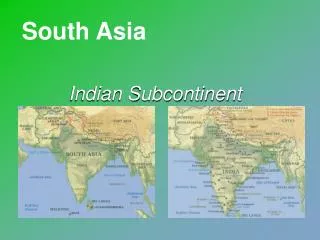
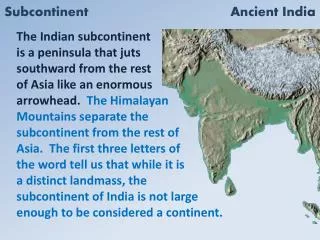
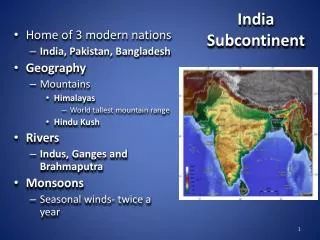
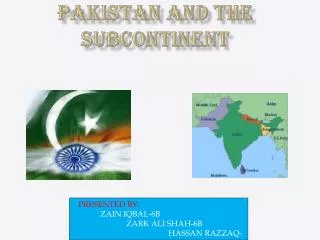
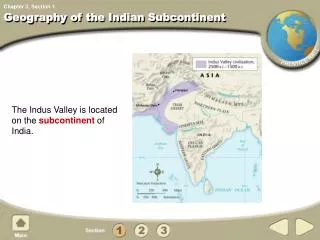
India is a subcontinent • Subcontinent is a large piece of land that sticks out from a continent. • India sticks out from the rest of Asia into the Indian Ocean.
Monsoon • A strong wind that blows across East Asia at certain times of the year. • India’s climate is ruled by monsoons or strong seasonal winds.
Aryans • Came to India after the Indus Valley Civilization ended. • Migrated from Central Asia • They were nomadic herders. • They had a caste system
Caste System • Society was divided into classes. • People had to stay in the caste of their parents. • People did the same work as their parents and other members of their group.
The Different Castes Chat-ree-yas Vie-shas Soo-dras
The Brahmins • Priests and teachers of Sanskrit and Dharma • Only caste allowed to teach and attend school
The Kshatriya “Chat-ree-yas” • Functioned as warriors or army leaders
The Vaishyas “vie-shas” • Traders, cattle farmers, minor officials, merchants and artisans • Owned their own business or farm land
The Sudras “soo-dras” • Servants and farmhands • Did not own their own land and businesses • Most people were in this caste
The Harijans or Outcastes • Known as “untouchables”, below all others • Responsible for handling the dead, cleaning up human waste, and collecting garbage
Rules • Caste status passed down through family generations and was impossible to change. • People from different castes could not marry, befriend, or eat with each other