Analyzing the Ode: Themes, Devices, and Connections to Antigone
This guide explores the nature of odes, focusing on their serious themes and complex lyrical expression. It provides a detailed framework for analyzing an assigned ode through SOAPStone and levels of questioning, including both surface-level comprehension and deeper thematic explorations. The assignment invites students to paraphrase each line, analyze figurative language, imagery, diction, and shifts in the poem, and ultimately relate their findings to the themes in Antigone. The analysis aims to deepen understanding of how odes contribute to literary themes.

Analyzing the Ode: Themes, Devices, and Connections to Antigone
E N D
Presentation Transcript
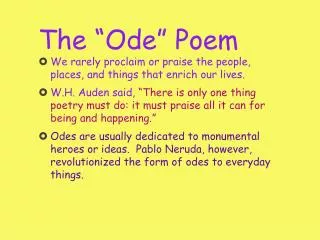
Ode An exalted, complex lyric that develops a serious and dignified theme. Odes appeal to both the imagination and the intellect.
Ode Analysis • Read your assigned ode, and, once you have done so, paraphrase each sentence. (HOMEWORK) • SOAPStone • Levels of Questions • Level 1 – On the line (ask and answer for each sentence) • Level 2 – Between the lines (ask and answer for each sentence) • Level 3 – Beyond the lines (ask and answer for the ode as a whole) • Devices Linked to Meaning (Lines, Device, Commentary) • You may create a table if you like • Analyze at least 2 examples of each – details/figurative language, diction, and imagery – remembering to use quotes in your commentary! • Shifts • Writing assignment • After reading and analyzing the ode, write a paragraph in which you explain why this poem is classified as an ode and how the poet’s use of diction, imagery, and details reveals Antigone’s themes.
Class Analysis • As a class we will discuss: • How is this poem an ode? • How does it relate to Antigone? • How does this ode contribute to your understanding of the play’s themes?