
Steps to a Healthier You: Understanding Nutrition through the Food Pyramid
In this lesson, students will explore the vital link between good nutrition and overall health by examining the Food Pyramid. Children will learn about essential food groups: grains, vegetables, fruits, oils, milk, and meat & beans, including recommended daily intake and health benefits. Through discussion, research, and food diary exercises, students will identify favorite foods in each group and understand the importance of physical activity. The goal is to empower children to make healthier eating choices daily and to develop lifelong healthy habits.
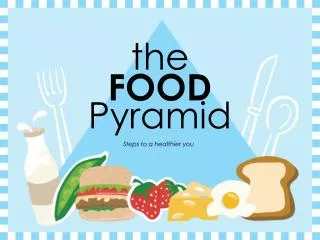

Steps to a Healthier You: Understanding Nutrition through the Food Pyramid
E N D
Presentation Transcript
FOOD the Pyramid Steps to a healthier you
Eating Right Every Day • Briefly describe the point of this lesson, which is that the class will be learning about the relationship between good nutrition and health.
The Food PyramidSteps to a healthier you GRAINS VEGETABLES FRUITS OILS MILK MEAT & BEANS
GrainsMake half of your grains whole • List a few examples of grains that are plentiful in your area. • Disscusshow much children should eat every day and when they might have them. • Together, research and discuss the health benefits of grains. • Encourage children to list foods that they like from this food group.
VegetablesVary your veggies • List a few examples of vegetables that are plentiful in your area. • Discuss how much children should eeatevery day and when they might have them. • Together, research and discuss the health benefits of vegetables. • Encourage children to list foods that they like from this food group.
FruitsFocus on fruits • List a few examples of fruits that are plentiful in your area. • Discuss how much children should eat every day and when they might have them. • Together, research and discuss the health benefits of fruits. • Encourage children to list foods that they like from this food group.
OilsKnow your fats • List a few examples of oils and fats. • Discuss how much children should eat daily and what foods contain oils and fats. • Together, research and discuss the health benefits associated with the different kinds of oils and fats. • Encourage children to list foods that they like from this food group.
MilkGet your calcium rich foods • List a few examples of milk products. • Discuss how much children should eat daily and when they might have them. • Together, research and discuss the health benefits of milk products. • Encourage children to list foods that they like from this food group.
Meat and BeansGo lean on protein • List a few examples of meat and bean products that are plentiful in your area. • Discuss how much children should eat daily and when they might have them. • Together, research and discuss the health benefits of meat and beans. • Encourage children to lisstfoods that they like from this food group.
Discretionary CaloriesExtras for luxury foods • What are discretionary calories? • Discuss how many discretionary calories children should eat every day. • Solicit class feedback for examples of ways to use discretionary calories.
Physical ActivityStrive for 60 minutes or more per day • What is physical activity? • Discuss moderate vs. vigorous activity. • Solicit class feebdackfor examples of moderate and vigorous activities.
Conclusion • Summarize the health benefits of each food group. • Encourage children to do research on any new findings about food and health. • Encourage children to continue keeping a food diary. • Encourage children to strive for 60 minutes or more of physical activity every day. • Ask your school nurse or doctor to visit the class to share facts about food and health on an ongoing basis.