Download
1 / 1
10 likes | 119 Views
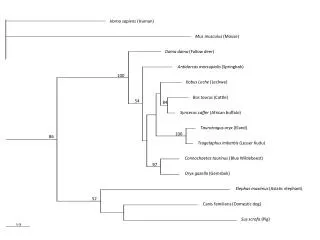
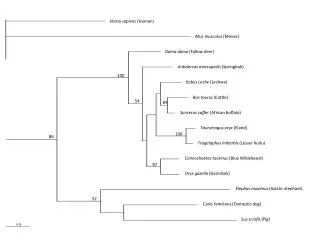
This study provides an in-depth analysis of various mammalian species, including Homo sapiens (humans), Mus musculus (mice), and Antidorcas marsupialis (springbok). We explore the anatomical features, behavioral traits, and ecological significance of these animals, along with their interactions within their ecosystems. Key species examined also include Bostaurus (cattle), Syncerus caffer (African buffalo), and Elephas maximus (Asiatic elephant). This research offers valuable insights into biodiversity and the evolutionary relationships among mammals.

E N D
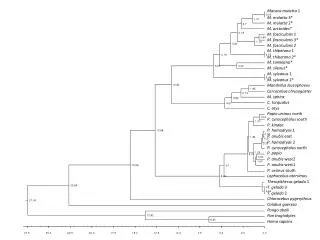
Homo sapiens (Human) Musmusculus(Mouse) Damadama(Fallow deer) Antidorcasmarsupialis(Springbok) 100 KobusLeche(Lechwe) Bostaurus(Cattle) 54 84 Synceruscaffer(African buffalo) Taurotragusoryx(Eland) 100 86 Tragelaphusimberbis (Lesser Kudu) Connochaetestaurinus(Blue Wildebeest) 97 Oryx gazella(Gemsbok) Elephasmaximus(Asiatic elephant) 52 Canisfamiliaris (Domestic dog) Susscrofa(Pig)