Understanding Nutrients: Functions, Digestion, and Metabolism
110 likes | 237 Views
Explore the essential roles of nutrients in our body, including carbohydrates, fats, proteins, vitamins, minerals, and water. Learn how these nutrient groups function to build and repair tissues, regulate bodily processes, and provide energy. Delve into the chemistry of nutrition, including the composition of molecules and compounds. Discover the intricate processes of digestion, absorption, and metabolism within the gastrointestinal tract, and understand the factors influencing digestion and common digestive disorders.


Understanding Nutrients: Functions, Digestion, and Metabolism
E N D
Presentation Transcript
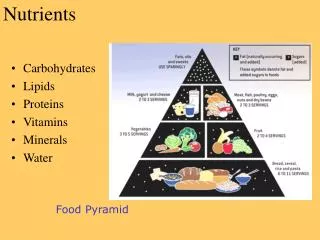
How Nutrients Become You • Six Nutrient Groups • Carbohydrates • Fats • Proteins • Vitamins • Minerals • Water
Chemistry of Nutrition • Elements-simplest substances • Matter-takes up space; is measurable • Molecule • smallest amount of substance with characteristics of the substance • made of two or more atoms bonded together COMPOUND is formed when atoms of different elements are bonded together
Functions of Nutrients • Build and repair body tissues • Growth spurts, injuries, illness • Regulate body processes • Circulation, digestion, absorption, metabolism • Provide energy • Fuel • Carbs and fats
Energy Value of Food • Kilocalorie-amount of heat required to raise one kilogram of water one degree Celsius • Kilocalorie=Calories • Fats=9 calories/gm • Carbohydrates=4 calories/gm • Protein=4 calories/gm • Alcohol=7 calories/gm (no nutrient value!)
The Process of Digestion • Body breaks down food into simpler substances • Mechanical Digestion-chewing… • Chemical Digestion • Enzymes (protein) cause chemical reactions • GI Tract-25-30’ (mouth to anus) • 5-14 hours from mouth to sm. intestine
Components of GI tract • Mouth-mastication, saliva • Esophagus (10 “) • parallels trachea (epiglottis) • Peristalsis-moves food through • Stomach (3 hours-fats take longest) • Gastric juices: HCl, enzymes, mucous • Chyme • Pepsin begins protein breakdown
GI con’d • Small Intestine (95% digestion occurs here) • 20’ long when stretched…1” diameter • Duodenum(12”) • Jejunum (4 ‘) • Ileum (5 ‘) • Large Intestine (colon) • Little digestion • Water reabsorption • Bacteria work on fiber • Feces pass through rectum and anus
Absorption of Nutrients • Passage of nutrients from digestive to circulatory and lymphatic systems • Water soluble nutrients • Amino acids, monosaccharides, minerals, vitamin C, B vitamins • Fat soluble nutrients • Vitamins A, D, E, K, fatty acids, glycerol, monoglycerides
Metabolism • Chemical changes producing energy • Energy stored in muscles-adenosine triphosphate (ATP) • Waste products from cell metabolism discarded through • Kidneys • Lungs • Skin
Factors Affecting Digestion • Eating habits • Emotions • Food allergies • Physical exercise
Digestive Disorders • Diarrhea • Constipation • Indigestion • Heartburn (GERD) • Ulcer • Gallstones • Diverticulosis