Download
1 / 14
140 likes | 261 Views
This outline presents a comprehensive overview of how research is funded, including key sources such as federal government agencies, corporations, and foundations. It covers how to apply for funding, what to expect post-application, and the components of a successful proposal. With practical advice on proposal writing and common reasons for rejection, this resource is invaluable for researchers seeking funding opportunities. Gain insights into the types of grants available, including R01 and R21, and learn how to effectively communicate your research goals.

E N D
How research is funded Jake Blanchard – University of Wisconsin – August 2007
Outline • Who provides funding? • How do I apply for it? • What then?
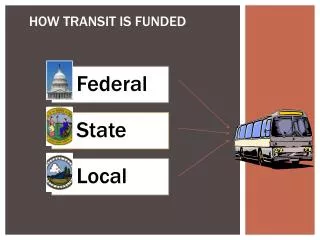
Who funds research? • Federal Government • Corporations • Foundations
Federal • National Science Foundation (NSF) • National Institutes of Health (NIH) • Department of Energy • Department of Homeland Security • Defense: DARPA, ARL, NRL, NRO, AFOSR • Health and Human Services • National Institute of Standards and Technology (NIST) • Department of Education • Center for Disease Control (CDC) • NASA
NSF • Biological sciences • Computer and information science and engineering • Cyberinfrastructure • Education and human resources • Engineering • Environmental research and education • Geosciences • International science and engineering • Mathematical and physical sciences • Polar programs • Social, behavioral, and economic sciences • Career awards reach across all areas • SBIRs do as well
NIH • 27 different institutes and centers, eg. National Cancer Inst., National Eye Inst., etc. • Grant Types • R01-most common, 3-5 years, no dollar limit, usually takes multiple submissions • R21-exploratory/developmental, up to two years, <$275,000 total, no preliminary data required • Many others
Energy • Computer and computational sciences • Materials sciences engineering • Chemical sciences, geosciences, and biosciences • Medical sciences • Life sciences • Nanoscale science, engineering, and technology • Nuclear energy • Superconductivity • Transportation
Foundations • Fulbright scholars program • collaboration, especially internationally • Packard Foundation • conservation and science; children, families and communities; population; etc. • Sloan Foundation • indoor environment; molecular evolution, theoretical neurobiology, computational molecular biology, astrophysics, marine science, limits to knowledge • MacArthur Foundation • affordable housing; community & economic development; digital media, learning & education; juvenile justice; mental health; policy research; regional policy; research networks; program-related investments
Industry funding • This varies from field to field • Research is generally more applied, shorter term, more closely watched • Many old research labs have closed down and, overall, industrial research levels are smaller than in the past • Watch for young investigator grants
Writing a Proposal • Title Page • Abstract • Table of Contents • Introduction • Background Section • Description of Proposed Research • Description of Relevant Institutional Resources • List of References • Personnel Section • Budget Section • Appendices
Why are proposals rejected? • Approach (73 percent) • proposed methods unsuited to problem • Problem (58 percent) • problem not of sufficient importance • Investigator (55 percent) • investigator does not have adequate experience • Other (16 percent) • requirements for equipment or personnel are unrealistic http://www.research.umich.edu/proposals/PWG/pwgrejected.html
Tips • Follow the rules • Focus on clearly stating the potential impact of the research, objectives, and proposed approach • Avoid jargon, acronyms, etc. • Show how your project: • will extend previous work • will avoid previous errors • is unique • Volunteer for review committees to see what makes a successful proposal
What happens next? • If you get funded: • You will have prepared a budget – you may or may not have to stick to it • You will generally have to be able to account for what you spend and show it was spent on this project • Focus on your research • Progress reports • Final report • Publish • Keep “next step” in mind
blanchard@engr.wisc.edu Good luck