Unresolved Hostility Between the USA and USSR (1945-1965)
40 likes | 164 Views
This assessment explores the persistent tensions between the USA and the USSR from 1945 to 1965. It analyzes the underlying causes of hostility during the early Cold War, focusing on ideological differences, historical grievances, and significant events that shaped their relations. The assessment also investigates the roles of key figures, such as Stalin and later leaders, in exacerbating tensions, and assesses the impact of these hostilities on global politics. Through contextual knowledge and critical analysis of sources, this work aims to provide a comprehensive understanding of this crucial period in modern history.


Unresolved Hostility Between the USA and USSR (1945-1965)
E N D
Presentation Transcript
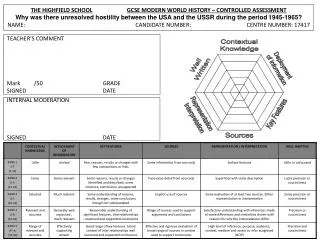
THE HIGHFIELD SCHOOLGCSE MODERN WORLD HISTORY – CONTROLLED ASSESSMENT Why was there unresolved hostility between the USA and the USSR during the period 1945-1965? NAME: CANDIDATE NUMBER: CENTRE NUMBER: 17417 TEACHER’S COMMENT Mark /50 GRADE SIGNED DATE Contextual Knowledge Deployment of information Well Written INTERNAL MODERATION SIGNED DATE Representation Interpretation Key Features Sources
THE HIGHFIELD SCHOOLGCSE MODERN WORLD HISTORY – CONTROLLED ASSESSMENT • Why were the Germans defeated in WW2 between 1941 and 1945? • NAME: CANDIDATE NUMBER: CENTRE NUMBER: 17417 TEACHER’S COMMENT Average Band GRADE SIGNED DATE Contextual Knowledge Deployment of information Well Written Representation Interpretation Key Features Sources
THE HIGHFIELD SCHOOLGCSE MODERN WORLD HISTORY – CONTROLLED ASSESSMENT • How important was Stalin in worsening relations between 1945 and 1953? • NAME: CANDIDATE NUMBER: CENTRE NUMBER: 17417 TEACHER’S COMMENT Average Band GRADE SIGNED DATE Contextual Knowledge Deployment of information Well Written Representation Interpretation Key Features Sources
THE HIGHFIELD SCHOOLGCSE MODERN WORLD HISTORY – CONTROLLED ASSESSMENT • Did changes in relations happen at the same rate between 1953 and 1962? • NAME: CANDIDATE NUMBER: CENTRE NUMBER: 17417 TEACHER’S COMMENT Average Band GRADE SIGNED DATE Contextual Knowledge Deployment of information Well Written Representation Interpretation Key Features Sources