Download
1 / 8
80 likes | 229 Views
Navigating the challenges of teaching large lecture courses can be daunting for new instructors. This guide explores effective strategies for engaging students in lectures, teaching complex materials, and adhering to local norms. It also emphasizes the importance of discussion sections, where smaller class sizes foster interaction and reinforce learning. Collaboration with teaching assistants (TAs) is critical; we discuss roles, responsibilities, and how to maintain morale. Additionally, we highlight leveraging technology to enhance communication, assignments, and student engagement.

E N D
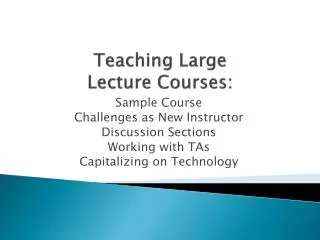
Teaching Large Lecture Courses: Sample Course Challenges as New Instructor Discussion Sections Working with TAs Capitalizing on Technology
Sample Course • Introduction to Clinical Psychology • 300 students, 2.5 TAs, 10 weekly sections • Exams, writing assignments, participation
Challenges as New Instructor • Engaging students in lecture • Teaching tough material • Figuring out local norms • Problems/Questions • DEO, DGS, DUS, senior colleagues
Discussion Sections • Potential Goals • Review lecture material • Apply lecture material • Discuss lecture material • Present new material • Format Change • Smaller class size • More opportunity for discussion, questions, interactive exercises
Discussion Sections • Section Materials • Prepare written description of section content and activities • Review with TAs, seek feedback b/f and after section • Miscellaneous • Consider evals third of way through semester • https://icon.uiowa.edu/support/onlinehelp/tools/surveys/ • Attend section of each TA
Working with TAs • TA Roles and Responsibilities • Explicit discussion prior to class • TAs are authority figures and part of teaching team • Hierarchical relationship with prof • Problems: go to DEO, DGS, senior colleague • Weekly Meetings • What going well • What problems have arisen • Discussion of how to teach, how to deal with problems, how to create materials, how to grade, how to interact with students, etc. • Be available to TAs in btw meetings
Working with TAs • Writing Assignments • Difficulty level • Assignment content: clarity exceptionally important • Grading criteria: provide detailed, concrete rubric to students ahead of time • Grading consistently across TAs • Review and modify criteria b/f giving to students • Meet with TAs after look at 10 papers to discuss problems • Identify who makes final decisions • TA morale
Capitalizing on Technology • ICON • Announcements, readings, lecture slides, grades, dropbox (turnitin) • Online Discussions • https://icon.uiowa.edu/support/onlinehelp/tools/discussions/ • https://icon.uiowa.edu/support/onlinehelp/tools/chat/ • Quizzes/Practice • https://icon.uiowa.edu/support/onlinehelp/tools/quizzes/ • Clickers • http://its.uiowa.edu/support/srs/teaching.shtml