Download
1 / 10
100 likes | 210 Views
The Cold War emerged from pivotal events like Tehran, Yalta, and Potsdam, creating a global landscape dominated by the rivalry between the USA and USSR. Most European countries aligned with either NATO or the Warsaw Pact, leading to a confrontational stance in nearly every international event from 1945 to 1990. The post-war order recognized spheres of influence, with many nations caught in the struggle between these superpowers. Key crises, such as the Greek civil conflict and strategic initiatives like the Marshall Plan, further shaped this new geopolitical reality.

E N D
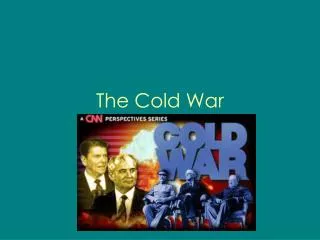
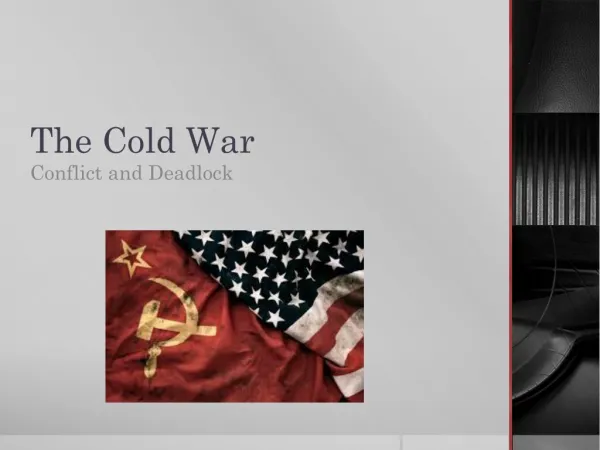
Cold War • Tehran, Yalta, and Potsdam, and the atomic bomb, created a global order dominated by confrontation between USA and USSR. • Most European countries aligned with either NATO or Warsaw Pact. • This confrontation characterized virtually every international event between 1945 and 1990.
Post-Potsdam Euro Order • Post Potsdam global order recognized • Spheres of influence • Struggle to maintain sphere of influence • Struggle to contain opponent's influence • Allegiance to one bloc or the other; few countries remained neutral, even if they stayed out of NATO or Warsaw Pact
Immediate Results of Conferences • Division of Germany/Berlin to subdue Germany, • Tacit allowance of Soviet expansion into Eastern Europe • Understanding that appeasement had failed to serve Western objectives: • Appeasement of Hitler had not prevented WW2 • Appeasement of Stalin had divided Europe • Future conflicts would strive for containment rather than appeasement
First Cold War Crisis: Greece • 1942-1949, clash between “communists” and nationalists • ’42-’44: ideological conflict within anti-Nazi resistance • ’44: Communists emerged in control of most of Greece; conservatives gov’t in exile returned from Cairo • ’46-’49 USSR-supported Communists defeated by US-supported nationalists • Greece remains polarized between leftist and conservative politics
Containment and Aid: Marshall Plan • Aid and cooperation: recognized interconnections between modern economies • 1947: Marshall Plan began; lasted 4 years; passed Congress after USSR seized power in Czechoslovakia • $13 Billion in aid; Organization for Economic Cooperation and Development (OECD) created • Offered to USSR and eastern bloc, but refused • USSR created COMECON to encourage two-way trade between Eastern Bloc countries • After plan, all Western participating economies produced above pre-war levels • Laid basis for EU, as it erased many tariff barriers
Containment: Berlin Airlift • 1948: US, UK, France agreed to create unified West Germany • Stalin responded by closing ground access to West Berlin • US/UK transport planes supplied Berlin: 270,000 flights • B29 planes stationed in UK: atomic threat? • USSR relented, but formally created the DDR (East Germany)
Containment: NATO • Western European nations, USA, Canada agree to defensive pact • 4 April 1949: Brussels headquarters • ANZUS linked Australia, NZ to US • 1952: Greece, Turkey joined • 1954: USSR suggested it should join; rejected • 1955: West Germany joined; east responded with formation of Warsaw Pact
Increase in Eastern Power • 22 September 1949: USSR detonated atomic bomb • atomic race for superiority began • American monopoly on atomic power broken • Western security in superior strength was broken • 1949: Mao Tse-tung victorious in China • USSR-People's Republic of China bloc feared • Geographical proximity of revolutionary communism to "hot spots" of de-colonizing Asia
Conclusions • With mutual fear, containment in third countries became the objective. • With atomic capabilities, each international crisis became a potential for mass destruction. • Isolationism no longer an option for US or USSR. • Military expenditures became priority during "peace“ time. • Vulnerability of man to total war extended into "peace“ time. • Colonialism replaced by competition -- military,economic, and propagandistic -- between USSR and USA.