Reconstruction
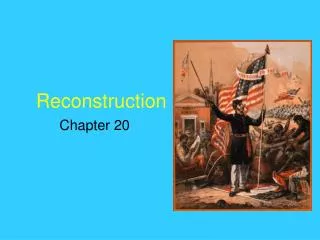
The Reconstruction Era (1865-77) followed the Civil War (1861-65) and aimed to address critical issues regarding the reintegration of Southern states, the fate of newly freed slaves, and the preservation of civil rights. Major developments included Lincoln's 10 Percent Plan, amendments abolishing slavery and granting citizenship and voting rights, and the conflict between President Andrew Johnson and Congress leading to his impeachment. Despite legislative advancements, African Americans faced systemic challenges, including Black Codes and violence from groups like the Ku Klux Klan. Ultimately, the era's legacy reflects both missed opportunities for civil rights and the persistence of racism.

Reconstruction
E N D
Presentation Transcript
Reconstruction 1865-77
Recap of the Civil War1861-65 • Causes of the Civil War • Short Term • Long Term
Recap of the Civil War1861-65 • Northern Strategy • Southern Strategy
Recap of the Civil War1861-65 • Role of Slavery • Primary goal was to “preserve the Union” • Emancipation Proclamation issued in 1862
Recap of the Civil War1861-1865 • End of Civil War • Abraham Lincoln assassinated April 14, 1865
Recap of the Civil War1861-65 • Destruction • Casualties • Economic Impact
Reconstruction1865-77 • End of the Civil War raised questions • How would southern leaders be treated? • Would the South be occupied? • How would southern states be readmitted to the Union? • What would happen to the newly freed slaves?
Reconstruction1865-77 • Lincoln’s Plan for Reconstruction • 10 Percent Plan • Opposition by Congress
Reconstruction 1865-77 • Wade-Davis Bill (1864) • Details • “Iron Clad Oath”
Reconstruction 1865-77 • Andrew Johnson becomes president after Lincoln’s assassination (1865-68) • Background • Presidential Reconstruction
Reconstruction1865-77 • Congressional Reconstruction • Radical Republicans • Details
Reconstruction 1865-77 • Three amendments added to the Constitution • 13th Amendment – abolished slavery • 14th Amendment – gave citizenship to freed slaves and ensured “equal protection” for all citizens • 15th Amendment - gave African-American males the right to vote
Reconstruction1865-77 • Conflicting Plans • Johnson vs. Congress • African-Americans suffer • Reconstruction Acts (1867 and 1868)
Reconstruction1865-77 • Impeachment of Andrew Johnson (1868) • Johnson vs. Congress • Tenure of Office Act
Reconstruction 1865-77 • African-Americans after 1865 • Emancipation • Freedmens Bureau formed in 1865
Reconstruction 1865-77 • Problems after Emancipation Landownership • “40 Acres and a Mule • “Sea Islands”
Reconstruction1865-77 • Sharecropping • New economic arrangement that emerged after the Civil War • Impact of Sharecropping
Reconstruction1865-77 • Black Codes • A way to control freed slaves in the South • Fourteenth Amendment
Reconstruction1865-77 • Violence against African Americans • Many southerners did not accept the end of slavery • Ku Klux Klan founded in 1867
Reconstruction1865-77 • African-American Political Involvement • Role in state governments • Some elected to Congress
Reconstruction1865-77 • Myths about Reconstruction • “Negro Rule” • “Carpetbaggers” and “Scalawags”
Reconstruction1865-77 • End of Reconstruction • Reconstruction gradually reversed • Violence by Ku Klux • Supreme Court decisions watered down 13th, 14th, and 15th amendments
Reconstruction1865-77 • Election of 1876 • Economic issues • Compromise reached in 1877
Reconstruction 1865-77 • Legacy of Reconstruction • Lost opportunity to provide civil rights and economic opportunity to freed slaves • Legacy of racism and violence against African-Americans • Migration of African-Americans from the south to other parts of the country