Download
1 / 16
160 likes | 334 Views
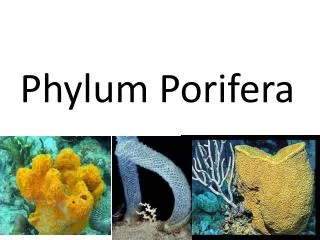
Explore the fascinating world of Phylum Porifera, commonly known as sponges, which thrive in aquatic environments, both marine and freshwater. These multicellular organisms are primarily found in benthic habitats, showcasing unique asymmetrical shapes and living a sessile life on the ocean floor. With a cellular level of organization, sponges engage in filter feeding, drawing water through their porous bodies to obtain nutrients. They reproduce both asexually and sexually, contributing to their resilience in aquatic ecosystems. Learn about their distinct characteristics and adaptations that define this intriguing group of marine organisms.

E N D
Phylum Porifera by: Chris, Jay, Rachel, Tyler, and Kayla
Aquatic, Terrestrial, or Both? -The organisms are aquatic. -They are both marine and freshwater.
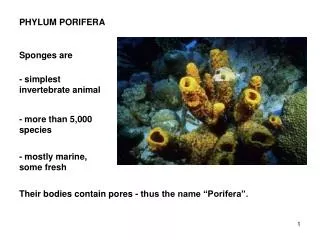
Representative Group of Marine Organisms The representative group of marine organisms are sponges.
Habitat -benthic -live on the bottom of the ocean
Level of Organization -cellular (composed of multiple cells) -different cells perform different functions -little organization
Symmetry -Asymmetrical -irregular shapes
Movement -Sessile -Sponges do not move (same spot forever) -necessities come to them (ex:food)
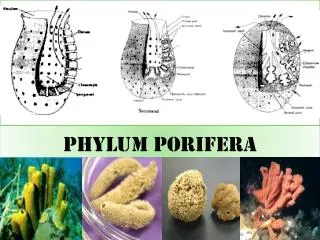
Feeding -Filter Feeding -Water diffuses through the pores -internal cells filter necessities out of the water.
Gas Exchange -body surface -gas diffuses from exterior cells to interior cells. -interior cells absorb Oxygen
Response to Events -generally don’t respond to events in environment -some release toxins for protection -no nervous systems
Circulatory System -no actual circulatory system -Functions as if it were an open system. -can exchange materials with environment -water diffuses into the cells -Oxygen, Carbon Dioxide, other waste diffuses out of the cells into water.
Reproduction -both Asexual and Sexual (can do either) -Asexual-budding-part of sponge pinches off and grows a new sponge on ocean floor. -Sexual-internal-eggs fertilized inside the sponge. -sperm released into water and carried to another sponge
Defining Characteristics -pores -irregular shapes -live attached to seafloor -cannot move -no internal organs (no cell wall) -multicellular -heterotrophic